Where is the life . . .
Last week I had “one of those weeks.”
Do you know what I mean?
My (paid) work was particularly intense—I worked as much in the one week as I typically aim to in a month. My husband was sick all week (and selfish creature that I am, I experienced this largely through the lens of the household help he was unable to offer). One morning as I was literally on the way to school with one child, having single-handedly wrangled the bunch all morning & feeling quite proud of myself for getting out the door at all, the school nurse called to report that another child was bleeding.
Because she’d cut herself with a knife.
At home that morning.
Which was followed by an awkward silence. I could just hear her wondering what kind of terrible mom lets her kid play with knives … then sends her to school?
“Uh, I guess she must have done that while making a sandwich this morning while I was helping her siblings get ready?”
[more awkward silence.]
(Eventually the nurse added, “she’s ok, I put a bandaid on it, do you want to talk to her?” And I did and she was and that was it.)
What was interesting was noticing how this affected me. The week, that is, not my daughter’s flesh wound. I was completely confident that she was fine and too busy to wonder if the nurse thought I was a terrible mom.
By the end of the week, I felt depleted. Makes sense, right? Work hard, you’re tired. But good rest, restorative rest—play, connection, packing a picnic, getting those basil starts from the farmers’ market planted, even cozying up with a book—felt like it would have taken energy and attention I didn’t have. All I wanted to do was zone out. Mindless TV. Mindless pizza.
I was grumpy as all get out. My poor kids bore the brunt of it as I tore around the house griping about their stray shoes and book, etc. To be fair, there were loads of stray shoes and books, but it’s not like the angry request to pick them up is more effective than the kind one.
And perhaps worst of all—though maybe not from my kids’ perspective—I was totally uninteresting. I had nothing interesting to say, or write. I was steeped in facts of legal work, thinking about it ad nauseum, and could have talked about it too—which isn’t *necessarily *boring, not if you’re like, into the law or whatever—but it wasn’t the stuff good essays are made of, you wouldn’t bring it to a salon (please humor me and pronounce this in your head SAL – on).
What I lacked wasn’t time, exactly, but time to use well. Time to rest well, to be well with people I love, to think well. I was a living emblem of what I’ve heard Andy Crouch talk about, our sad swap of ‘toil and leisure’ as poor substitutes for the rhythm of work and rest we are made for.
I felt this viscerally when, last Friday, I found myself biking to an appointment made weeks ago, when this particular stretch of calendar was brilliantly empty. As I pedaled through DC traffic, passing cars jammed at intersections, reveling in the rush of freedom on an open stretch of road, I felt a distantly familiar sensation, unlocking something shriveled and tight within me: the luxurious expansiveness of a wandering mind.
Biking requires physical energy and some degree of attentiveness, but, at least for me, in allocating some portion of my attention to scanning for opening car doors and potholes, a vast remainder is reserved in which the mind can leapfrog across possibilities and stray thoughts. I started thinking … interesting things. As I enjoyed the internal expedition I realized it felt so revitalizing in part because I hadn’t experienced it all week long.
During the work week I’d been focused, summoning ADHD’s surprise inverse of scatter-focus: superhuman ability to focus on one thing. I dove deep into the problem I was working on, hours passed as I kept at work, the problem wound its way into my dreams. My work bills hourly, so this time-consuming problem, engaging me wholly this week, was a financial boon. I am grateful for the opportunity the work afforded.
And yet in the single-minded focus that earned money, I lost something I hadn’t realized how much I valued: unfilled space to lift my gaze and let my mind roam, dancing between thoughts whose connections were mine to discover, muse on ideas, wonder about esoteric questions. All the raw material of thinking and wondering that goes into having anything interesting to say in writing—or in conversation, perhaps—but even before it makes its way into these downstream applications, enriches a life through its very existence. All that immense productivity cost me the ability to be curious, reflective, creative.
I don’t want to argue that this is valuable—I’m taking for granted here that it is. I’m just observing that productivity came at its cost. Where is the life we have lost in living, as T.S. Eliot asked; where is the beauty and curiosity and creativity we crowd out with our productivity, I add.
Sure there are seasons when an intense labor needfully crowds out other things, perhaps studying for a big exam, having a baby. And there are those for whom survival means intense labor you might not choose.
But often we accept that cost by accident; it creeps in, as our busy-ness grows, stealing the margin that helps us be sweet instead of sour, engage in recreation that requires something of us along the way to restoration, and, as I felt that Friday, keeping our eyes down, away from the sparkling wonder of the universe. It’s understandable. Gotta pay them bills. Gotta get stuff done. Then end up zoned out on the couch, mindlessly eating pizza while mindlessly watching a glowing rectangle. Been there. Was very much there last week.
But I don’t want to be.
Do you?
Maybe we start by recognizing when we have a choice, and pausing to ask: what is the cost of what I’m prioritizing here?
This past week reminded me that I don’t want to exercise the choice I have in favor of absolute productivity at the expense of margin. Which means: I must actively choose to be less productive. Not only for sanity and well-being, as important as they are, but also for t/he space to allow unexpected beautiful things to grow. Things that take margin to flourish.
I’ll end with a brief object lesson offered to me on a long walk I finally managed to take on Sunday—the day I practice the discipline of rest. This week, rest as movement where my mind was free to wander. There is a particularly beloved sunny hill in DC that abuts a north-south parkway—daffodil hill, its called. Each spring its filled with daffodils, the whole thing glows yellow. Looking down from the top as in this photo you can see the first flush unfurl.
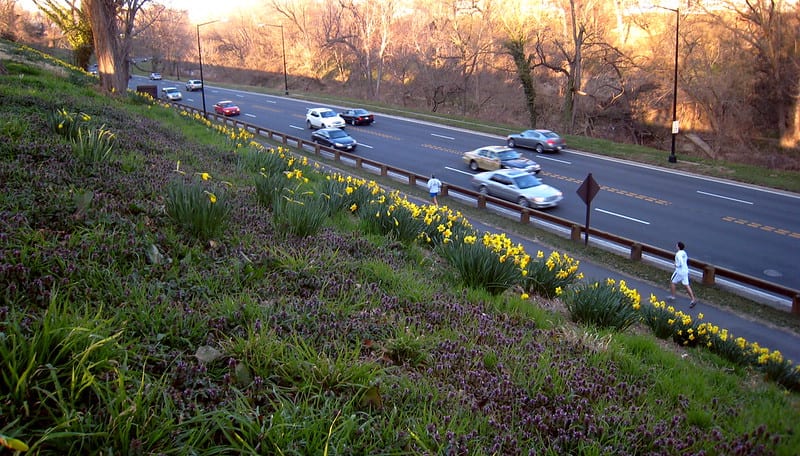
*Photo by Amy West, licensed as CC BY 2.0. *
Except this past spring. Because last year, when spring had past, the National Park Service who manages the land, facing severe budget cuts to both personnel and maintenance budgets (remember DOGE?) for the first time since I’ve lived here did not prune back the summer’s rabid growth. The hillside was covered in vines and other intrusive plants that—without the annual pruning back—took over the hillside entirely. I barely saw any daffodils sneak through this spring. I walked by that hillside Sunday, covered in nasty encircling green things, feral, grotesque—all for the want of pruning.
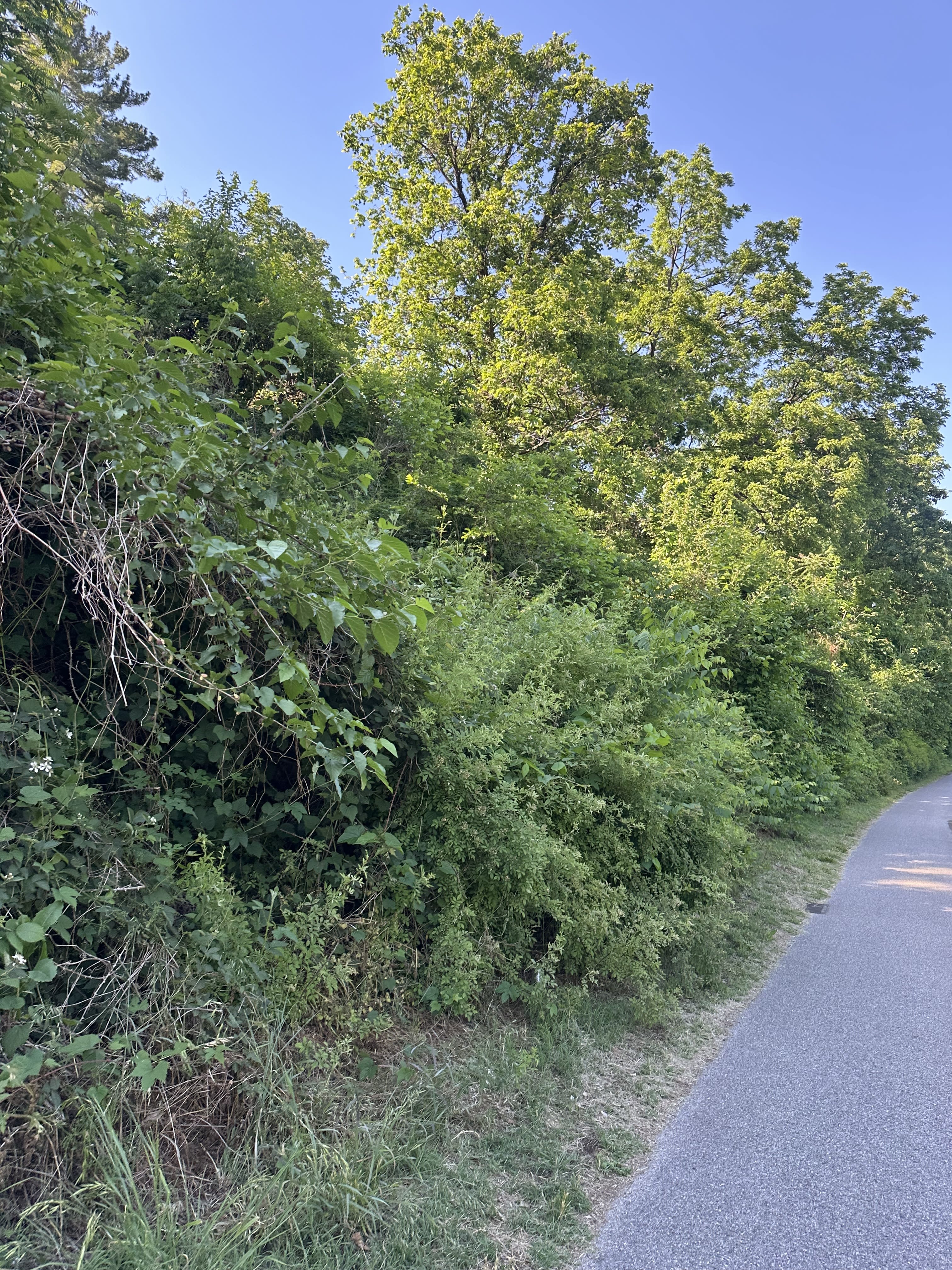
Here from the bottom, looking up at the same hill. THE SAME HILL.
This is what the failure to prune creates. More isn’t better. More is an overgrown forest, a porcelain berry vines choking a native tree, crowding out the space for daffodils.
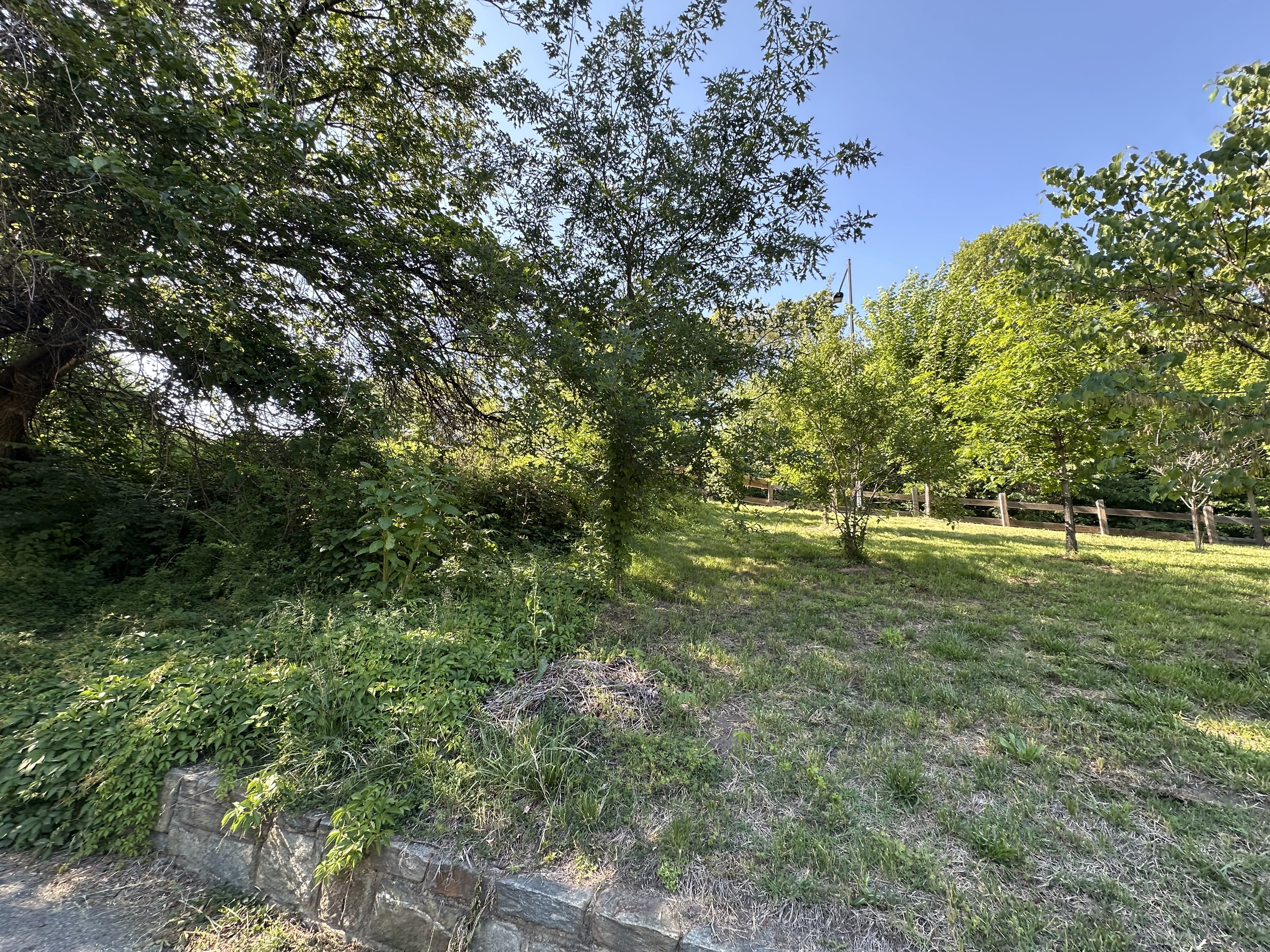
Side by side comparison of the edge of the overgrown portion, and where the land has been tended—maybe this marks the boundary of land under the city’s control, rather than the National Park Service?
What a difference it makes to create so-called empty space.