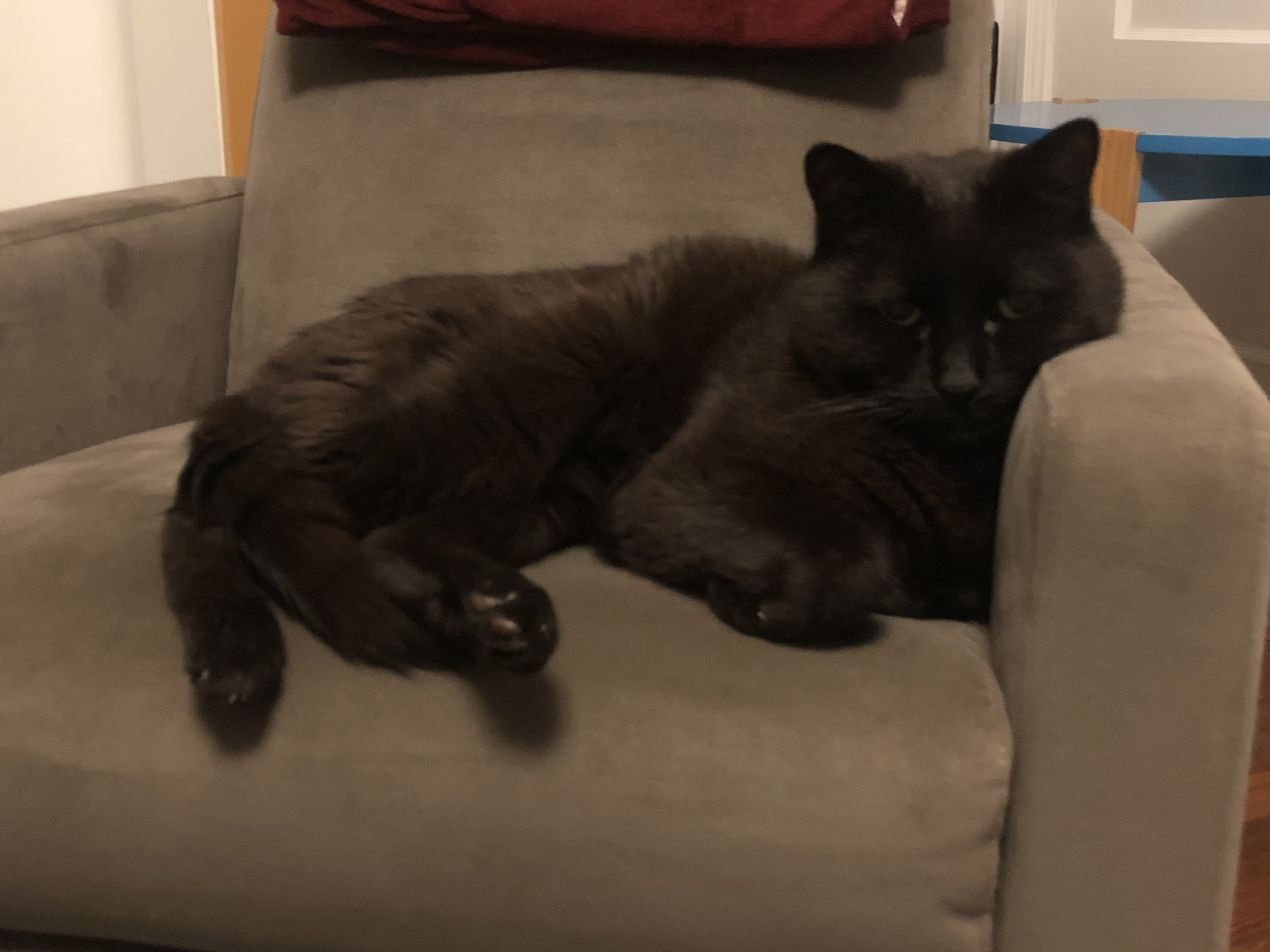
Goodbye, Fatty
June 15, 2026
**
Fourteenth century mystic Julian of Norwich recorded in her account of her sickbed visions that God welcomes us “merry and glad, with a friendly countenance and a cheerful greeting … as if we have been released from a prison where we had been languishing in pain. Sweetly, he says, “Oh my darling, I am so glad you are here.”
This sounds just like my daughter’s description of our cat. The night he died, I cradled my grieving daughter in my arms, where her weeping was briefly interrupted by the recollection of Fatty’s habit of coming to meet her at the door when she came home from school, waiting for her, greeting her, making her feel like she wasn’t alone.
Fatty did not adopt the aloofness common to cats, but took the peculiar approach of seeming to love every human he met, jumping up on the couch to sit next to someone visiting our home for the first time, adjusting his paws around their arm in one of his two signature moves, the arm hug, as if to say, “Oh my darling, I am so glad you are here.”
When we were first married, we moved Fatty, who I had acquired when single, just out of law school, from my old Brooklyn apartment to the one we would share with our roommate-landlord in Manhattan, sympathizing as the cat meowed in resistance we drove him over the bridge leaving the borough we he had begun life, laughing at our cat puns—ManCattan—giddy with the freshness of our new life together. From the start, it was the three of us.
When our roommate hosted small groups in that spacious Manhattan apartment, our cat routinely jumped up to the lap of a surprised visitor, welcoming them home. The visitor would settle in, delighted at having been chosen, the comforting weight of a soft, content companion a calming drug—then pull us aside as the group departed, marveling at the spark of specialness, the belonging it made them feel. We never told the cat-struck guest that Fatty had pulled the same move on someone else the week before. Fatty may have loved indiscriminately but it was no less genuine. Perhaps he was simply able to recognize, as God does, that each guest is special, does belong.
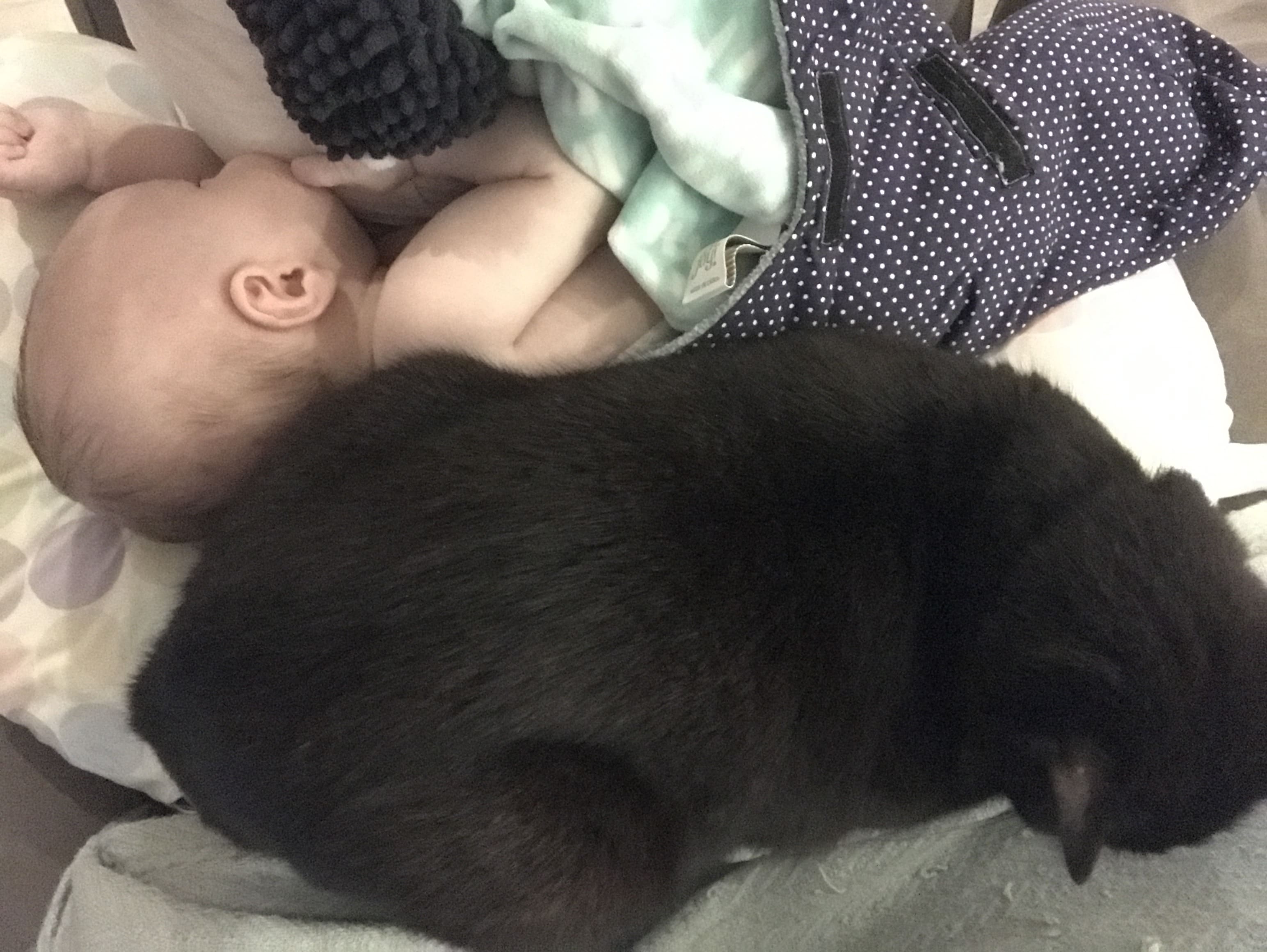
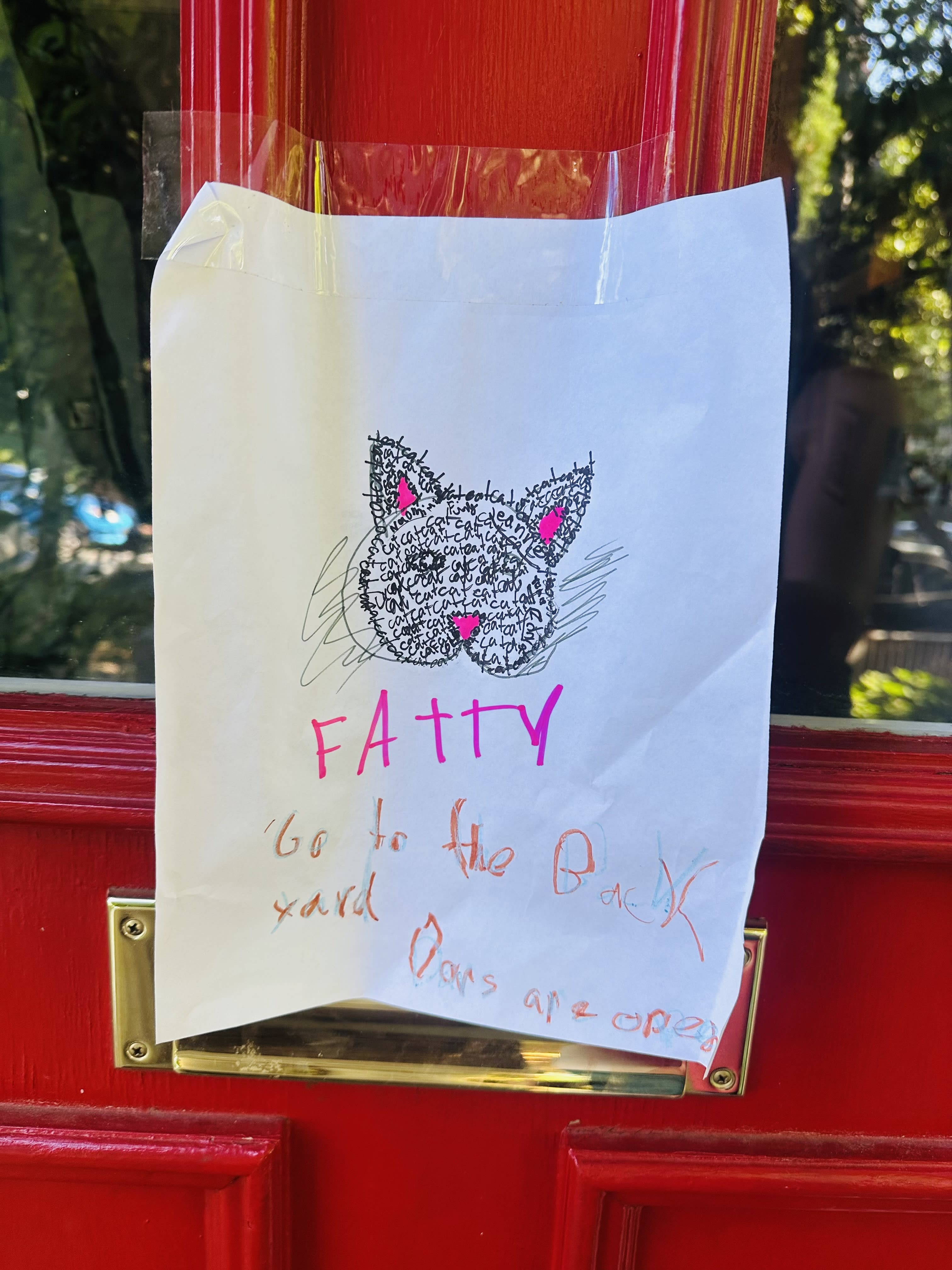
His real name wasn’t Fatty, of course. I adopted him & his brother from a dating couple who had adopted them jointly, decided to move in together, learned the man was allergic to cats, and chose the relationship over the cats. When I got the cats, they were named for the locations of their first date Loki Lounge and Harvey Theater. Fatty was Loki—which seemed the wrong name entirely. So out of the gate, I swapped: his scrawnier brother became Loki, and Fatty became Harvey. But Loki was tiny and Harvey was—though never truly chunky—comparatively more solid. My roommate and I soon began applying cutesy nicknames to the pair. For the smaller one: Little Guy, Scrawny Prawn—said with love, mind you. So of course you eventually call the bigger one Fat Cat. Which easily morphs into Fatty. Which became, a few years in, especially after his younger brother died, his permanent moniker. The only one my spouse, and eventually my kids, would know him by.
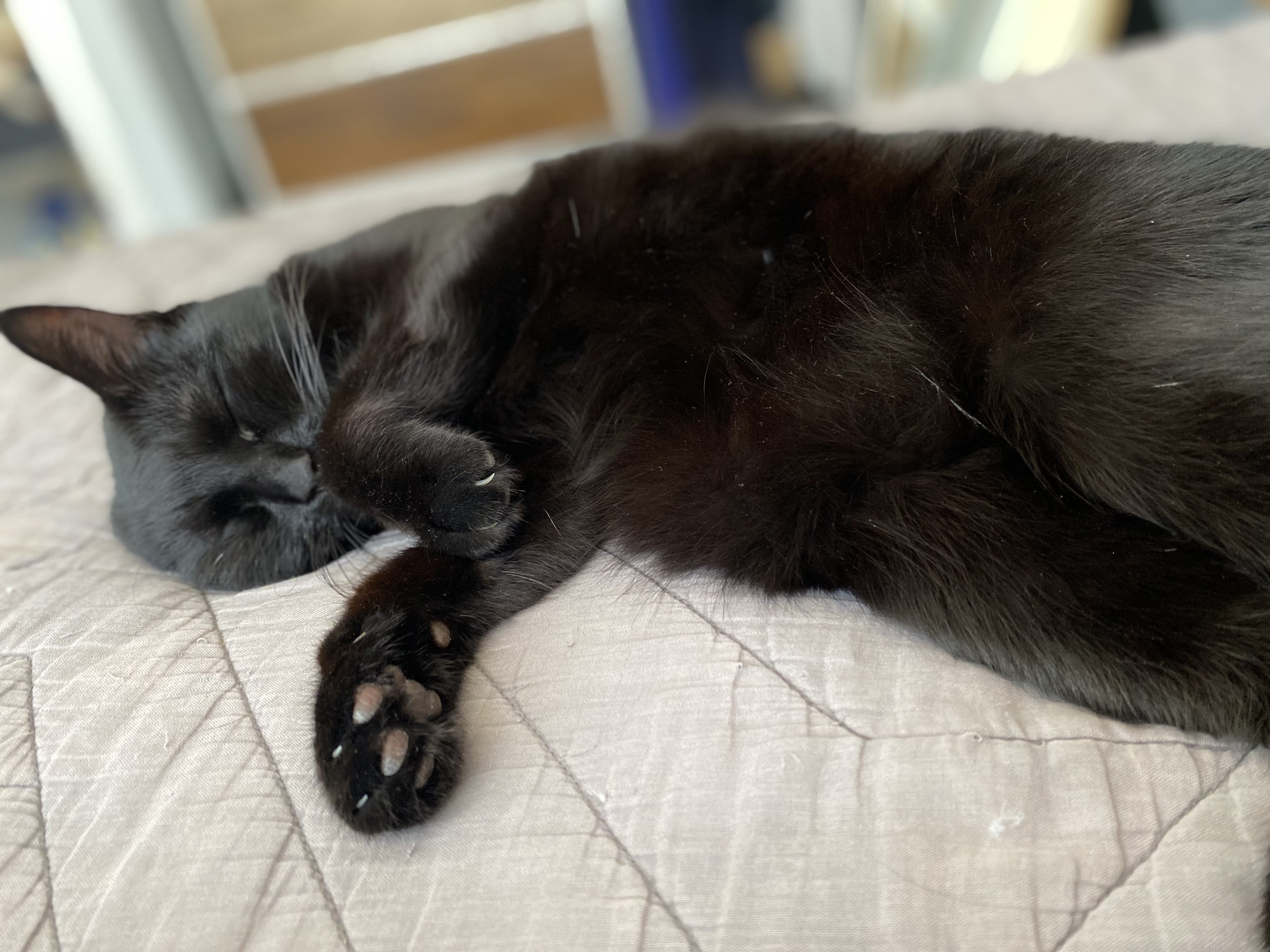
Fatty was a fine name for a cat who, though not fat, loved to bask in and next to human laps. It suited him. As our kids got older and brought friends to the house, who inevitably chased the cat—who inevitable went into hiding until they sat down patiently on the couch, at which point he would pad out to investigate, relieved at the resolved chaos, then jump up to the waiting friend—these friends would giggle at the name Fatty, pointing out “He’s not even fat!”, and fall in love with him like our small group guests had years earlier.
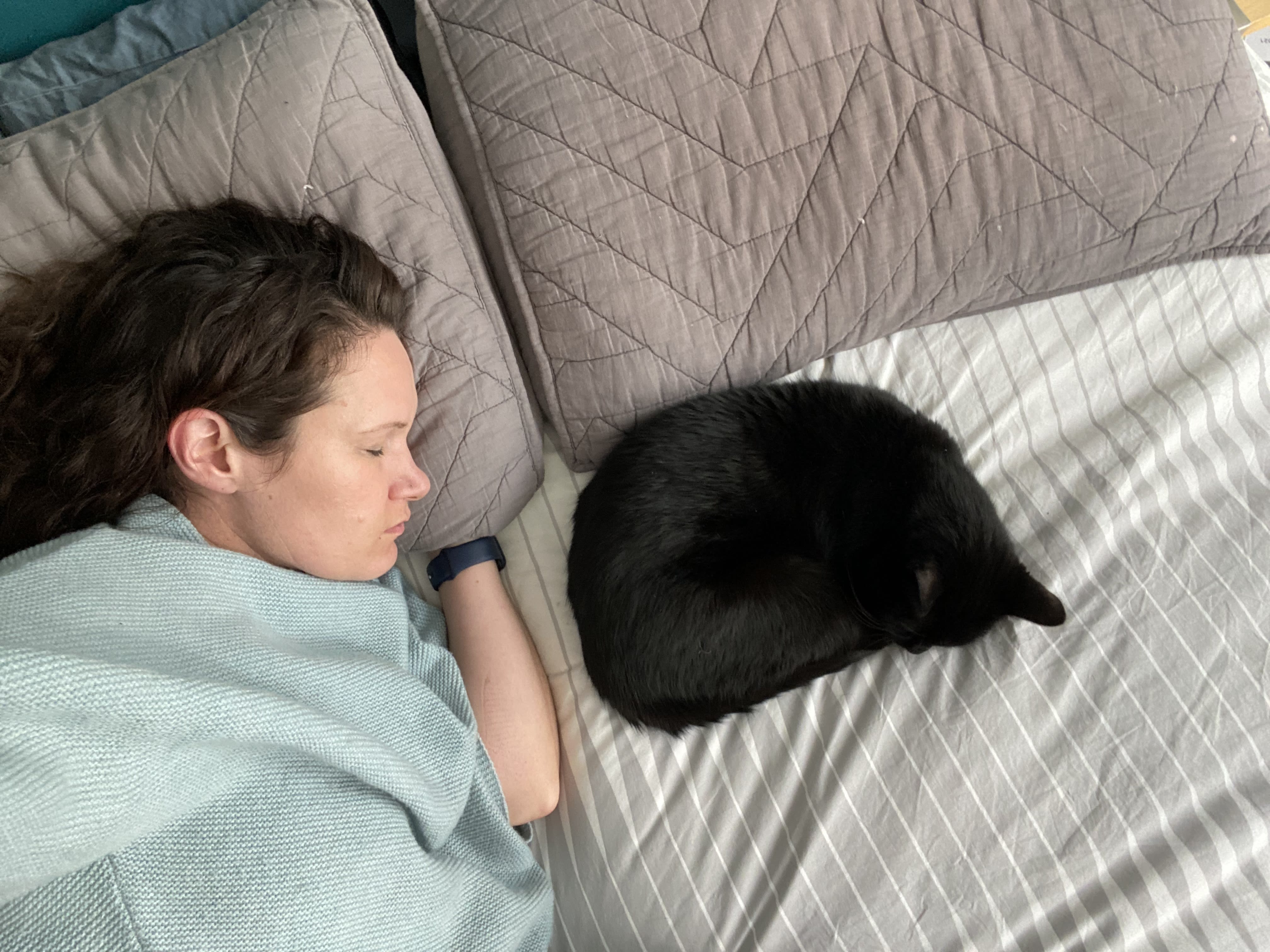
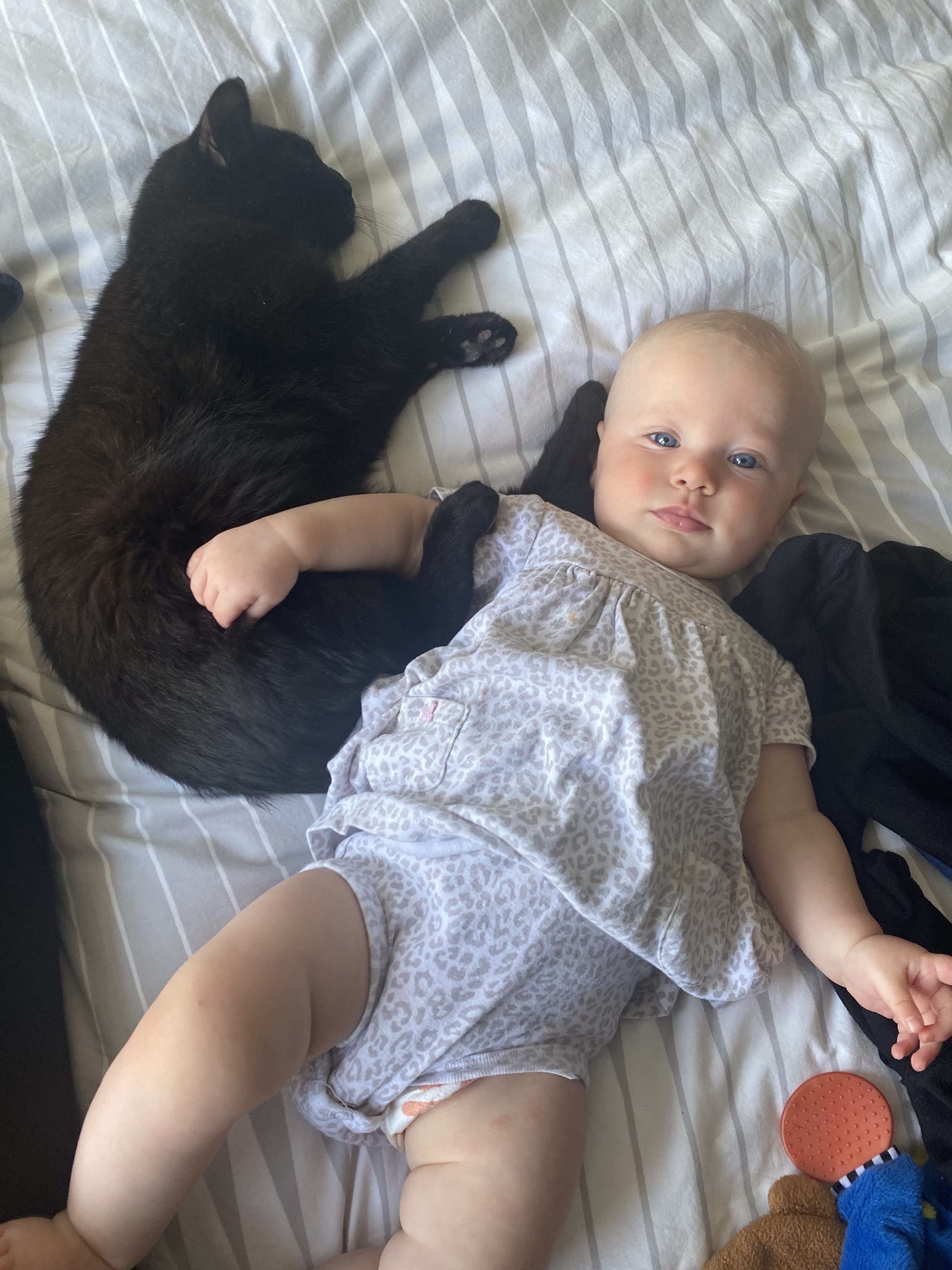
The only real issue occurred one October evening in the mid-point of his life, when our new baby was hospitalized, and we were camped out at the hospital all day, returning home to sleep and feed the cat. One night as we returned home, exhausted from the day’s uncertainty and waiting, we must have forgotten to close the door. Fatty took advantage of the opportunity; in the morning, door ajar, he was missing. We were distressed, heightened of course by the distress over our human child, who we had to prioritize. Just as we were preparing to leave the house to return the hospital, a friend—a very competent, serious, professional friend—passed by on a morning run. She paused to say hi, noticed our anguish, agreed to look for the cat as we left for the hospital. As we got in the car, we heard the trailing sound of our friend jogging down the street, yelling loudly “Fatty! Fatty!”
Pause to invite additional memories from the gathered mourners. For example:
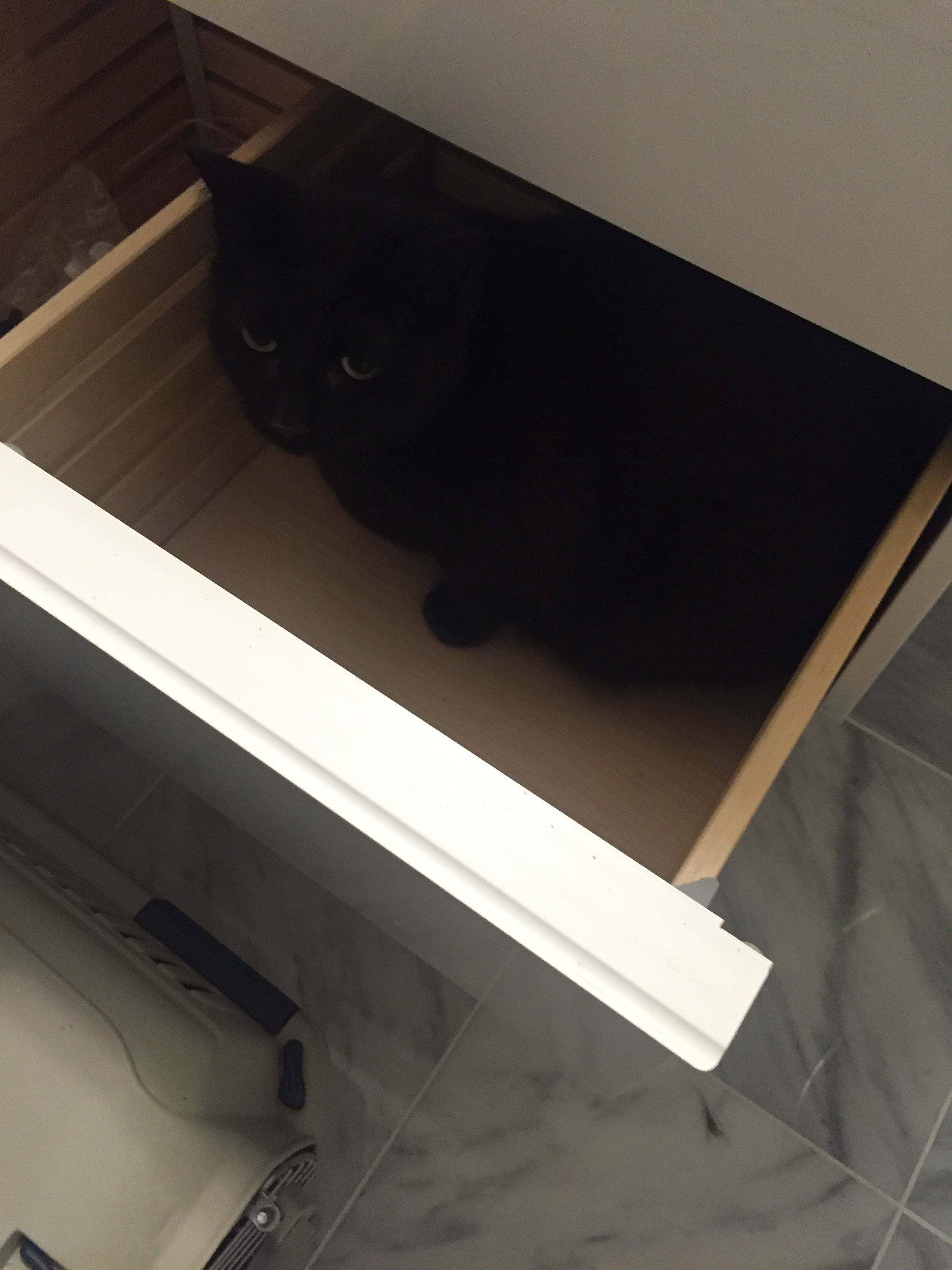
- Enclosing our cat in the bathroom when we moved to DC to avoid the chaos of the move, entering to find him … not there. Later finding him curled up in a cabinet drawer which he’d crawled into from the back.
- His signature moves: arm hug, cat hat
- His habit of unleashing ‘revenge poop’ on our floor shortly after we returned from a vacation. When this transitioned from emotional blackmail to a frail, aging body we were not sure
- His habit of knocking things over to get our attention, particularly when shut out of rooms he wanted to enter. One night during my poor NY days I made the mistake of leaving a glass of water next to my laptop in the living room during the night; barred from my bedroom, he knocked over the water (out of spite?) necessitating an emergency replacement
- Proudly entering the house with a dead rat in his mouth
Or as most of the ~dozen neighborhood kids gathered to say goodbye to the cat they’d loved and cared for reported: he always came and sat next to me. He made me feel comfortable and cozy.
The Christian scriptures do not have a clear teaching on the presence of our beloved animals in heaven, but they do describe it as a time when every tear is wiped from our eyes. I am not the first to wonder if for this to happen, the pets we love here must indeed make their way to us there in some form. I like to imagine it, even if it’s doctrinally suspect. But what I do know is that the tears we shed for Fatty now will be wiped away, not only in some distant future, but by gathering with each other, here and now, sharing the grief we feel for our beloved cat with others who loved him. And that while he is gone, we can carry a bit of his spirit with him, like Fatty, welcoming people into our lives and home as he did, offering each person who comes within our orbit the feeling that they have been chosen, they are special, they belong: “Oh my darling, I am so glad you are here.