Calling vs Assignment
When I joined a big Christian international non-profit in 2016, I thought it was my calling.
In fact, it started as a literal call. I received a surprising invitation from an attorney I’d worked with from the outside looking in, when I was putting in my time at a boutique New York City firm serving charities. This was training, a stepping stone. I was waiting for God to show me what I was really meant to do, certain that work at a firm wasn’t it. I had a plan: I wanted to teach a non-profit legal clinic and I was building the experience to enable that. But then this invitation disrupted my plan. I remember a deep, blinding, sudden knowing: this was it. The answer I’d been praying for.
I entered that work joyfully, with deep gratitude for the door God had opened, the certainty with which my interrupted plan brought me to a clear pinnacle of all I’d done before. I thought I would be there for the rest of my career. I know, this sounds even crazier now than it did in 2016, in a world where employees change jobs every 4 years. But I hadn’t just found a job, I had found a calling.
Working at this organization allowed the daily labor, the work that paid for my groceries and mortgage, to be a deep expression of who I was, of my heart to serve God and the vulnerable, to work in community with others who shared this passion. It was a calling, and it was good.
What I didn’t understand then was that to work toward a world in which people are free and safe, to be part of the people of God seeking to embody justice, peace, goodness in the world, was a calling for a lifetime—but at that organization simply for that season. That organization was a temporary assignment. I ultimately left the organization after eight years (two years ago this month!) not out of any sense of rejection of the organization or its mission, but because God was inviting me to a new assignment. Same calling, new arena, new shape.
That season shaped me profoundly, of course, and I remain grateful for the growth and formation it offered.
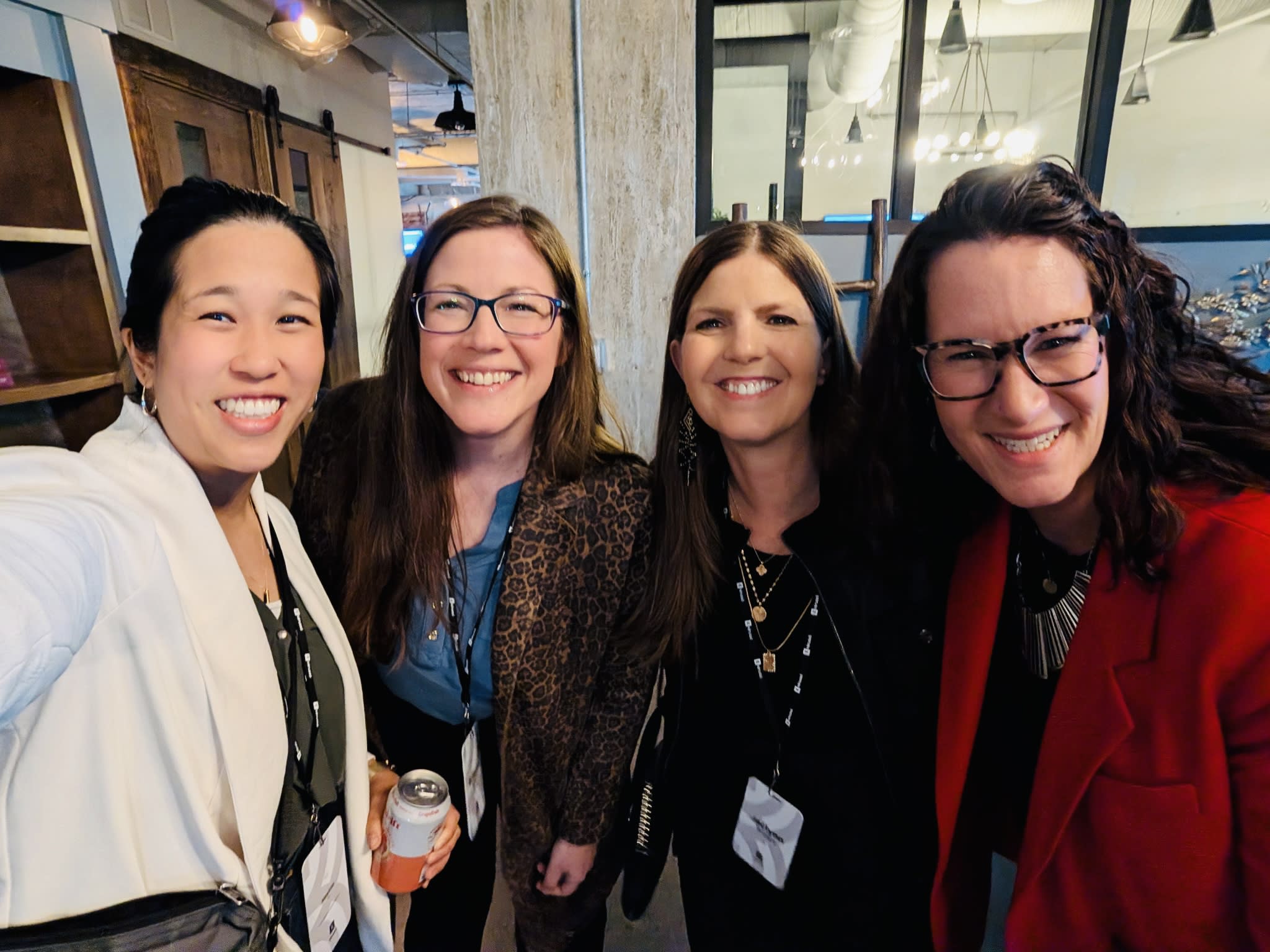
Recently though, I was reminded of how this same thread of calling worked out over time, at formational, missional places like that organization, and outside of it—plays out in each of us differently. At an event for marketing leaders at faith-based non-profits, I ran into three former colleagues. Each of us knew each other from my early days at the organization, and each of us have had wildly different stories since then. Two have stayed, with roles evolving over time, riding through sometimes turbulent seasons but still sensing God’s invitation to stay and tell the story of the work God is doing through that organization. One other woman left, and now leads advancement for another organization serving vulnerable people. All of us have shared a sense of calling, and each of us have had very different lives over the last decade expressing that calling through our work.
Seeing these three women filled me with gratitude for that season and the way it shaped our stories (even in the challenges, which all human institutions face and exhibit, because all humans are broken).
But even more, I felt gratitude for the way God had written our stories over the past decade. We were all surprised at where we had each come to from where we had started a decade ago. We all still have questions about work and mission. And we all have grown in our knowledge of God, our closeness to God, as we have a decade more experience offering our lives and trusting God to walk with us, work through us. We look at what God has done in our stories and feel awe.
Not everyone has a deep emotional relationship between their work and their identity, I realize that. I think we’re all prone to create false gods out of something, but we all have different tendencies. Work, though, is a big one, for me, and for the cultures I’ve lived in for the past two decades. Is that any surprise? “Work” is just another way of saying how we direct a large portion of the precious, finite time and energy we’ve been given into the world. Evelyn Underhill describes our work—whether it be repairing automobiles or peeling potatoes—as the raw material for our cooperation with God, our acting as “agents of the Creative Spirit in this world.” Whether that work is focused on tending to people or making a product, whether it is paid or not, work is the use of who we are for something.
A comfortable life? A way to feel useful? A resolution to anxiety about whether we measure up? Or as Underhill urges, “an offering of life … a willingness to take our small place in the vast operations of His Spirit, instead of trying to run a poky little business on our own.” A calling, and a response. It’s easy to conflate our calling—our sense of what matters most and our particular role in it—with the arena where we live it out. We think fulfilling our calling means taking the stage as a soloist, but what if God’s “mighty symphony … unexpectedly requires your entire silence?” What does it mean for work to be an expression of a deeper calling, to something more than the box of any given job, and to have freedom from work, or any particular job or organization, as an idol? How does work become an offering of self, faithful stewardship, trust, obedience? How do you know what role work is playing, whether it is time to stay or leave, distinguish calling from assignment?
I will not reduce your story to three pointers for work as calling, or my pro tips for decision-making. I offer instead my trusty refrain: it all comes down to discernment. There’s no rubric or map that solves your journey, only making space to listen and discern, work through the process, staying in it as it takes the time it takes. That is what I love helping people do. And I have a few things in the pipeline: a retreat especially for my fellow IJM alums, a broader career transitions retreat, a new project telling the stories of others who have gone through change. If you mull on these questions like I do, stay tuned!
(PS: The best way to stay connected to opportunities like these is via my newsletter—see you there!)