Singing with Strangers
I first heard Josh Ritter on a short compilation of live songs, one I downloaded as part of a music club I once, briefly, belonged to. A sort of Columbia Records for the digital age. You can’t buy it anymore, as far as I can tell, but it was a magical album.
It album introduced me to the wild characters and strange worlds of Josh Ritter (mummies! nuclear destruction bunkers!) co-existing with sincere folk rock (a touch of country, gospel, blues), ballads crammed with the wry observations and earnest longings I too felt in that season of life, made me feel clever for getting so many of the references, then simply happy because they were smartly funny.
Two things stood out to me on that live album. One was something in his voice, which I’ve seen and heard live many times since then, but perceived as keenly even when the face isn’t visible, even on records: so much of the time, he’s so clearly smiling with pleasure as he sings. It’s like you’re in on a joke with him. It’s as if he’s thrilled the muse has graced him with this combination of words and he gets to sing them to you on this particular night. You come to feel you are a part of something, and these muse-graced words increasingly bring you joy, so when you sing them aloud—you find that you are smiling too.
The other was the audience singing. The audience sings audibly through much of it, including numerous parts where I couldn’t catch the words because he throws his microphone to the crowd, himself silent, their muffled unison not crisply captured. One song on the live album is Kathleen, perhaps the song all Josh Ritter fans know best. It combines yearning with a character: he is not actually the song’s protagonist—is he? We don’t know, but we know what it’s like to feel as the character does: heightened high school emotions, hoping for a chance with the beautiful one, hopelessly out of reach: all the other girls here are stars, you are the northern lights. Who wouldn’t succumb to a pickup line like that? But of all the “boys in her line,” the singer seems to be the only one content not to possess her, just give her a ride home. And he’s thrilled about it, rejoicing, like you would have been in high school, like I would, shoe on other foot, all of us singing aloud with grinning gusto, I’ll be the one to drive you back home, Kathleen.
Another song on that album was Me and Jiggs, which—we assume?—also contains characters, or is Josh really great friends with a guy named Jiggs? It doesn’t matter, they describe a feeling, one that captures the sweetness and heartache of your 20s in Brooklyn:
Me and my friends in the park drinking beer underneath the tree
Lying on your back as the sun goes down, you know it’s perfect cause you’ve got to leave
On a Saturday night in a town like this I forget all my songs about trains
A bar with a jukebox and you on my arm heaven and earth are pretty much the same.
This song, and Good Man, also that album, were favorites for singing aloud while biking. I recall vividly the visceral thrill of belting these lines at the top of your lungs as you barrel down the West Side Highway on your bike back to Brooklyn, early 30s now, over the moon about the good man you’ve finally met: babe we’ve both had dry spells, hard times in bad lands—I’m a good man, for you; I’m a good man. It was as delightful singing the familiar words today en route to an annual mammogram in my 40s, jump-starting fresh joy for the good man I’m still with, singing them, as Josh does, with a smile in my voice: what a wonder the muse has given these words and I get to transport them through my vocal chords on this sunny fall day!
His songs are swollen with complicated words. I’ve always loved that about them. I actually can’t belt most of them from my bike because I can’t remember, let alone mouth, the winding verses with improbable syllable contortions and rhymes that finally escort you to a catchy chorus. Such a volume of thought, such clever constructions, feels good to a smart woman, especially interwoven with the periodic plain-spoken declaration: I’m a good man. I’m not sure if I can make you stay. I’ve got a new lover now. Joy to you baby, joy to me too.
His vast range of topics is vast, yet I think, as with so much complexity, you could roughly tame it with a 2×2 grid. (This isn’t a hill I will die on; I’m no music critic. You are welcome to dispute my categories, and please also tell me your own favorites, where you have sung them with a smile on your face). One axis, from the playful (all those characters!) to the sincere, the other, joyful to somber.
Some of his playful characters are joyful: Kathleen! Others have a harder edge. Henrietta, Indiana, for example, which also contains exquisite scanning of four syllable words that tick together like interlocking puzzle pieces: All of Henrietta Indiana heard my hallelujah. He composes a nuanced picture of economic hardship and our tragic coping methods in eight poetic lines—catchy enough for the bike singalong, if you can move your mouth fast enough:
Henrietta, Indiana mill townLocked the factory down and shut it up tightMy daddy and my brother and sixteen-hundred othersLost everything they had in the nightDaddy got a taste for the hard stuffHenrietta, Indiana was dryWe’d ride out to Putney, he’d tell me he loved meThe drive home was always so quiet
But my favorite description may be the rapid scattering of nouns that collectively recreate the scene in Putney later in the song, compact like a haiku: The empty parking lot, the lights, the lonely kid, the register. Devastating. Perfect.
On the sincere end—the singer seems to sing as himself, not a character—are two of my favorites, underrated: For Your Soul (joyful, despite covering challenging ground) and a lament that would be at home in church, a duet with Bob Weir: When Will I Be Changed?
But I’m sharing all this not as a music critic, but a fan: I don’t want to dissect his oeuvre. I do want you to listen along with me.
More than that, I want you to sing with me.
Have you sung aloud in public recently, not in, say, a church, or a choir, or in the shower, safely, but on a bike maybe, as I do, or ambling down the sidewalk, a park bench, where others could have heard you, but it wasn’t for them but your own simple pleasure, the delight Josh Ritter projects every time he opens his mouth? Did you notice how it felt, what it did to you? Puff you up with an optimistic joy about the state of the world entirely unsupported by newspaper headlines? Console your laid-low brow? Change you briefly into a mystical paragon of self-forgetting, knowing only the music and not your performance of it?
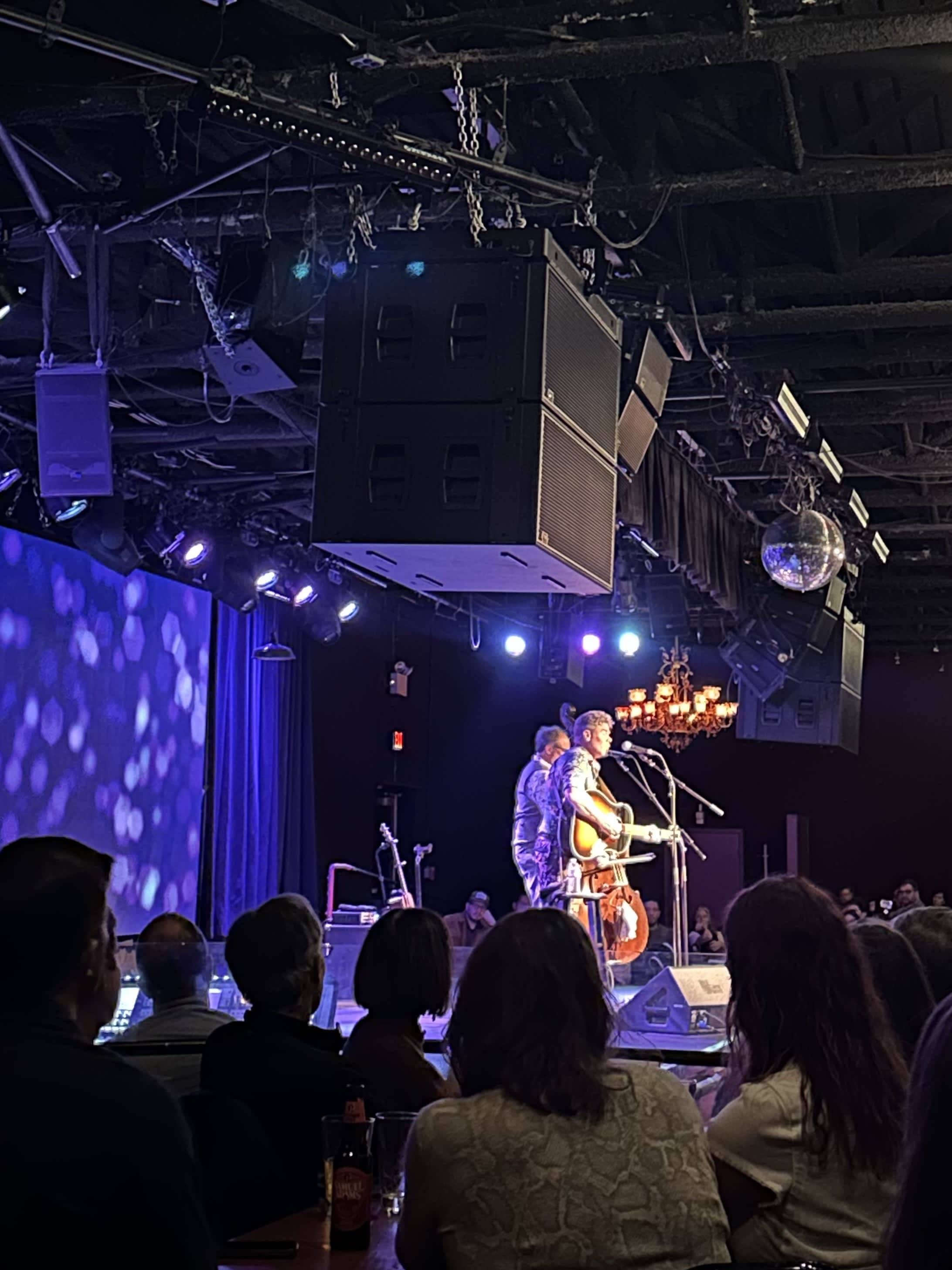
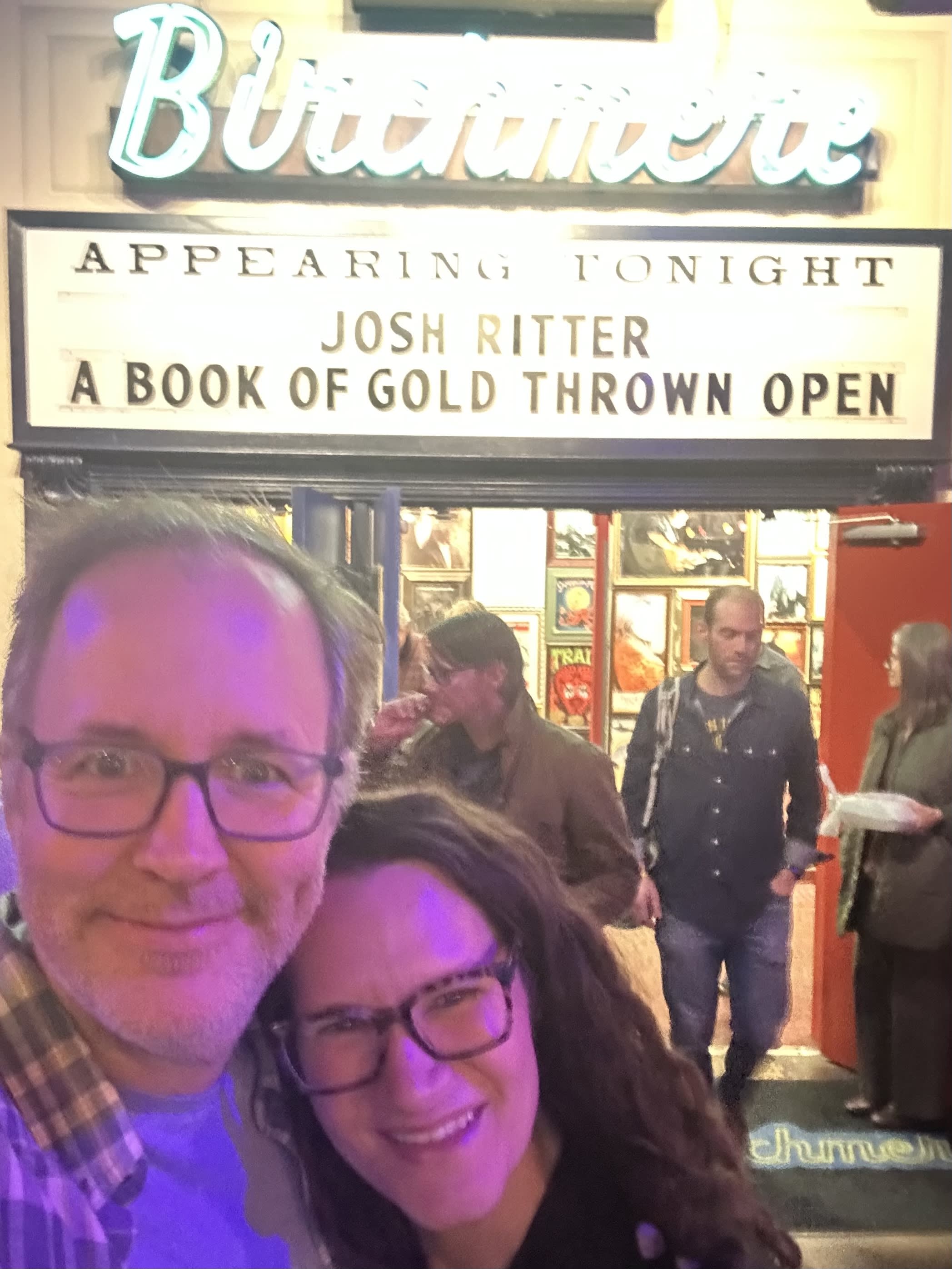
Or as at the Josh Ritter show I attended last night, at every Josh Ritter show I’ve attended, sung in a group, felt your voices meld into something that bound you in a kind of suspended unison? I heard David Bailey speak recently about the unique cultural importance of an anthem, the patriotic symbol we do—the way singing those words together itself creates the unity it purports to describe. A good concert can feel like that; Josh Ritter’s often do. As I first learned with that live album, Josh Ritter fans sing along. They know the words, maybe to the new stuff, definitely the back catalog. The songs, with all those words crammed in, the challenging pacing, unexpected rhymes, take some work to learn. When you hear the person behind you singing, accurately, Infidels, Jezebels, Salomes, and Delilahs (it makes sense in context) you feel a beat of kinship. This is my kind of person. You haven’t even turned around to see the person’s face; you don’t need to.
Where else do we get this?
Once a gay man spent the better part of the hour he took to cut my curly hair to tell me about how he left the Mormon church of his youth because of his sexuality, but he missed it because of the singing; he’d joined a church choir to feel that suspended unison again.
Is the hunger to sing together a hunger for something deeper, to be together? To belong together? Churches may have doctrines that make some people question their belonging, but a body of voices isn’t doctrine, it’s participation. Do you have to mean all of the words you sing at the outset, or does singing them shape you in the direction of the words, like an anthem makes a nation?
Our church has recently moved into our own building, the first time in our history. We are thinking about what it might look like to love our neighbors tangibly. What do they need? Maybe we should throw open the doors and turn on the music, create a space for the singing with strangers we usually have to buy a ticket to experience. Maybe that could demonstrate ideas of belonging, regardless of doctrine. Maybe that would bind us together in love, like we pray the Spirit will do, enough, perhaps to surmount the awkwardness of the stilted conversations with someone who is different from you that you typically must doggedly endure until time shows you at last how un-different they also are. Could singing together be a shortcut to recognition?
I do not leave the Josh Ritter concert and exchange numbers with anyone, but I feel fondly about the anonymous crowd. If I saw a stranger on a metro car with a Josh Ritter shirt, I’d be more likely to smile.
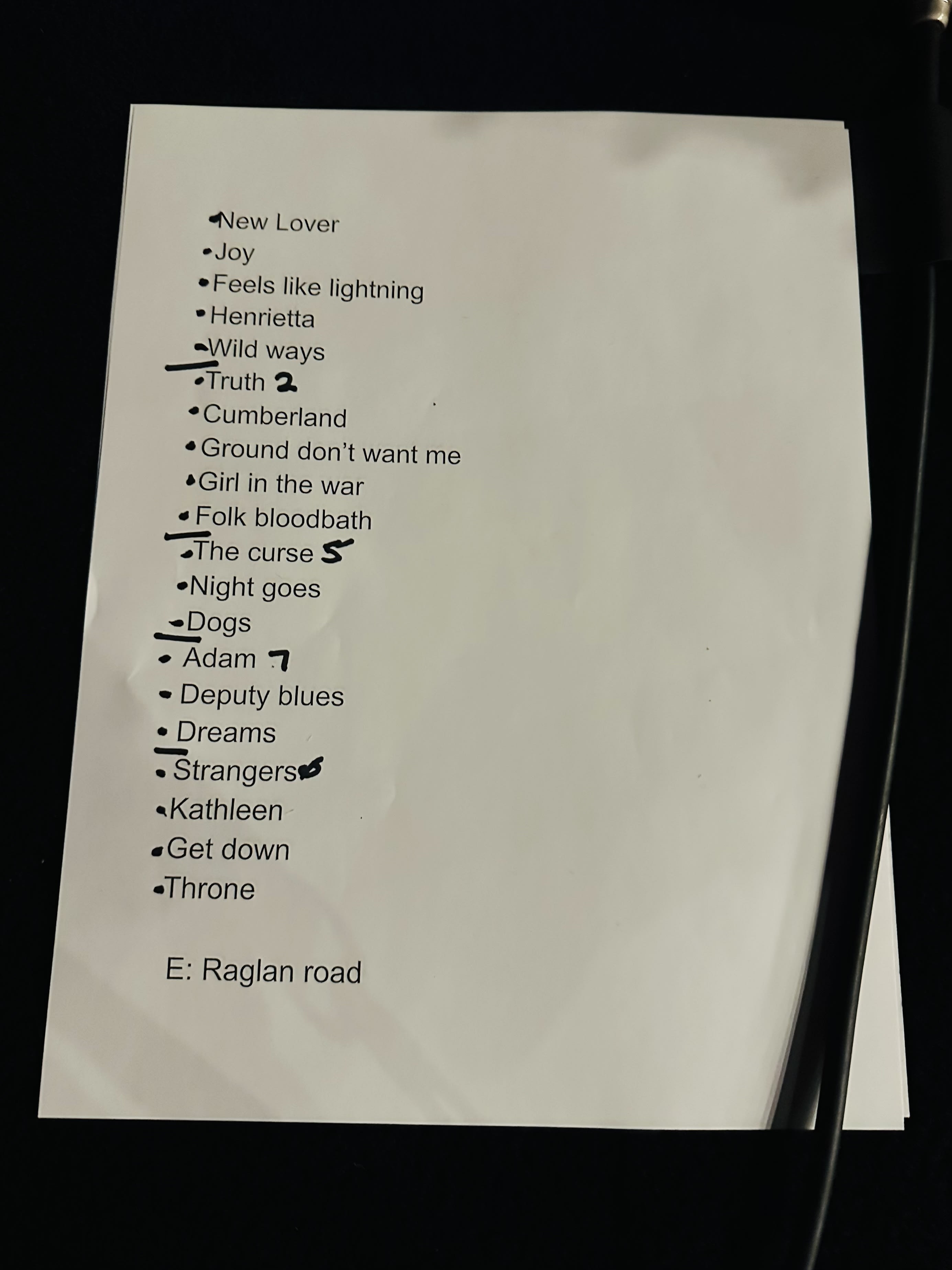
Josh Ritter fans sing, especially, most of all, about Kathleen. People whistle in anticipation at the opening bars, Josh emits a laugh of anticipatory pleasure, as if he’s thrilled he gets to give us the gift of singing this song together. Everyone knows the first line, everyone sings on cue. Josh Ritter, 50ish, is no longer the protagonist directly, if he ever was—but he sings with committed nostalgia about the shining moment that transports and connects us, sings not for us, but with us, about the hope, the ache, the euphoria, which we have all before felt, and now fold into together as we too reminisce about the night that I drove you back home Kathleen.