The Benefits of Beauty
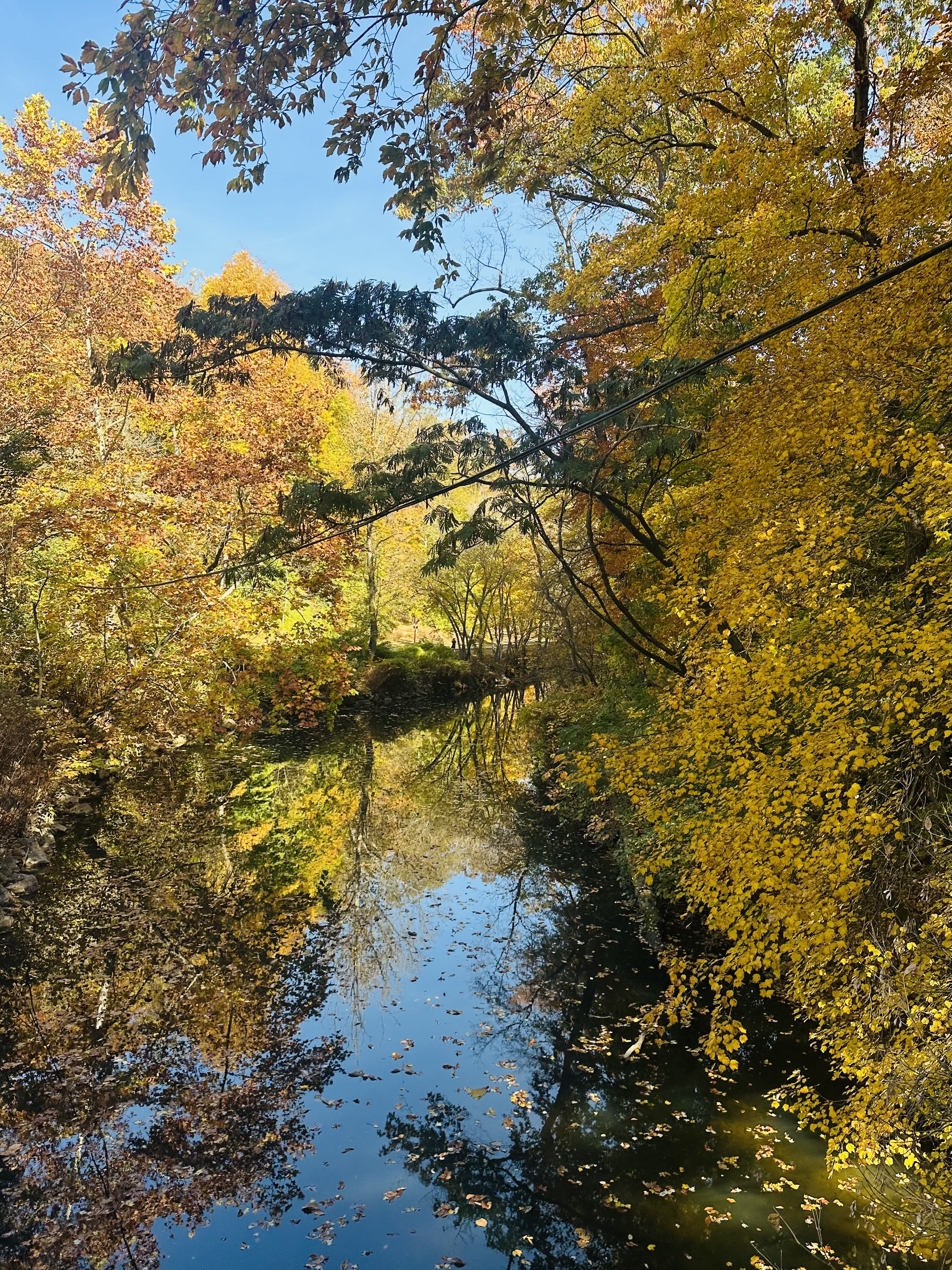
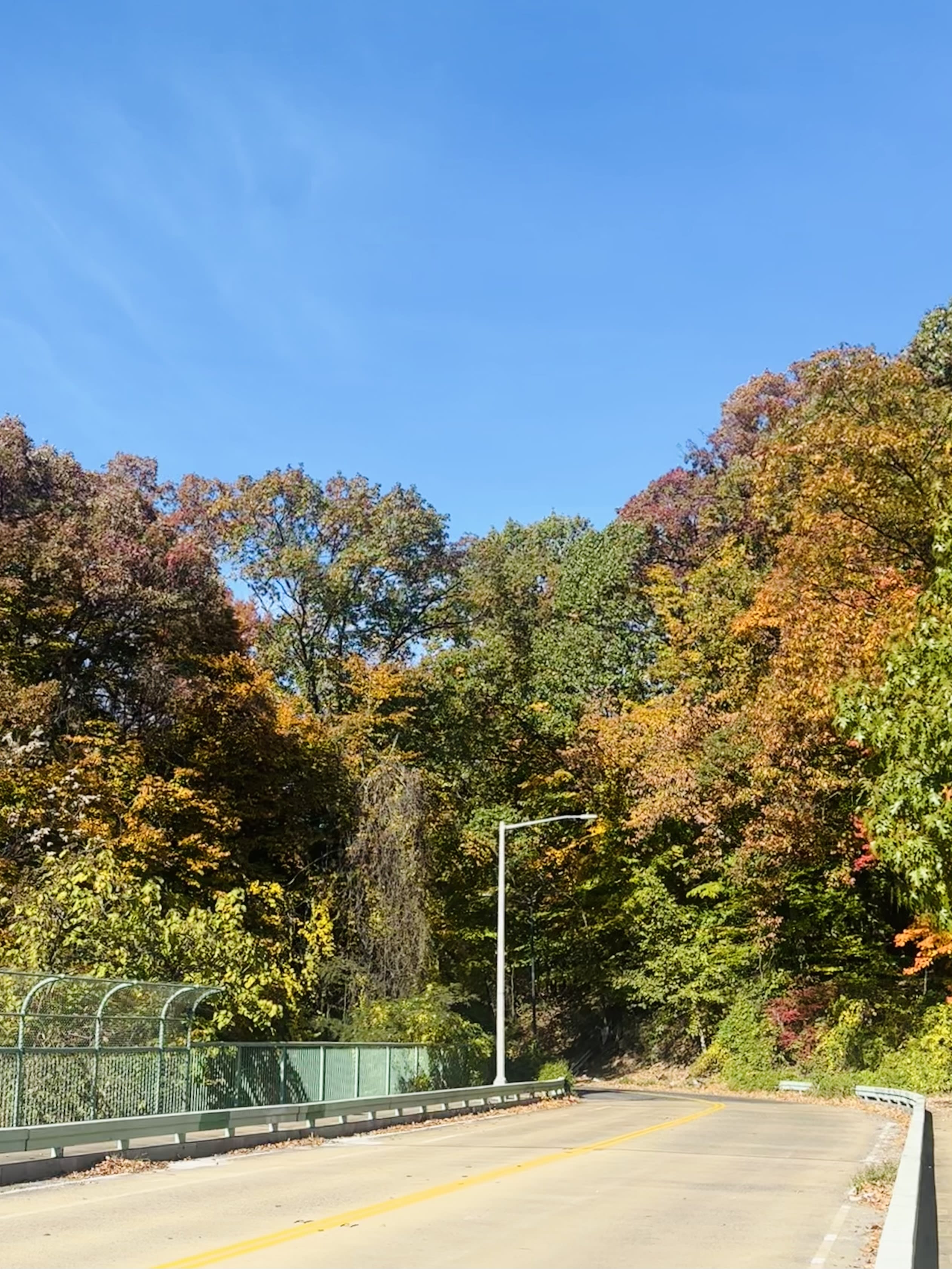
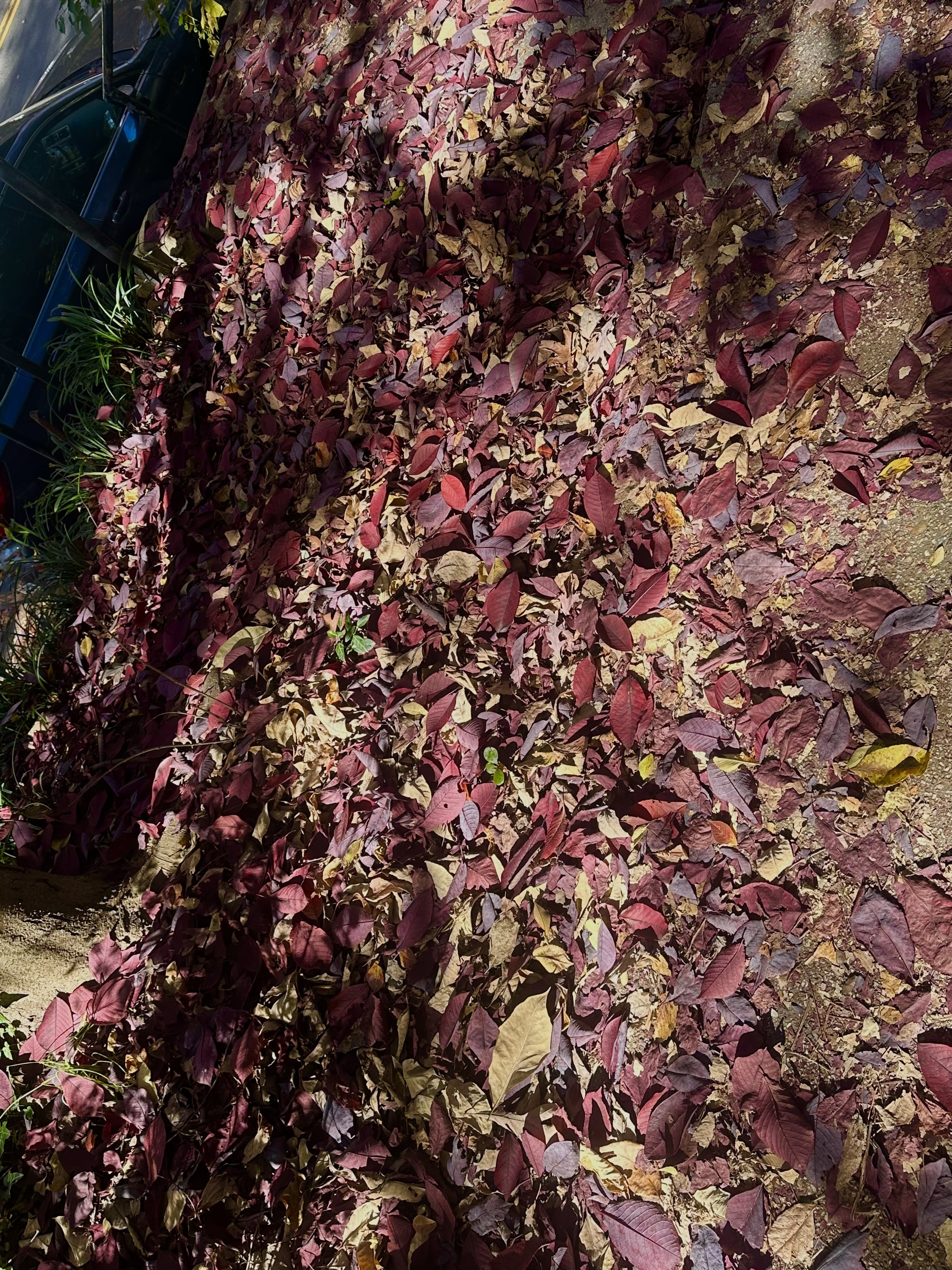
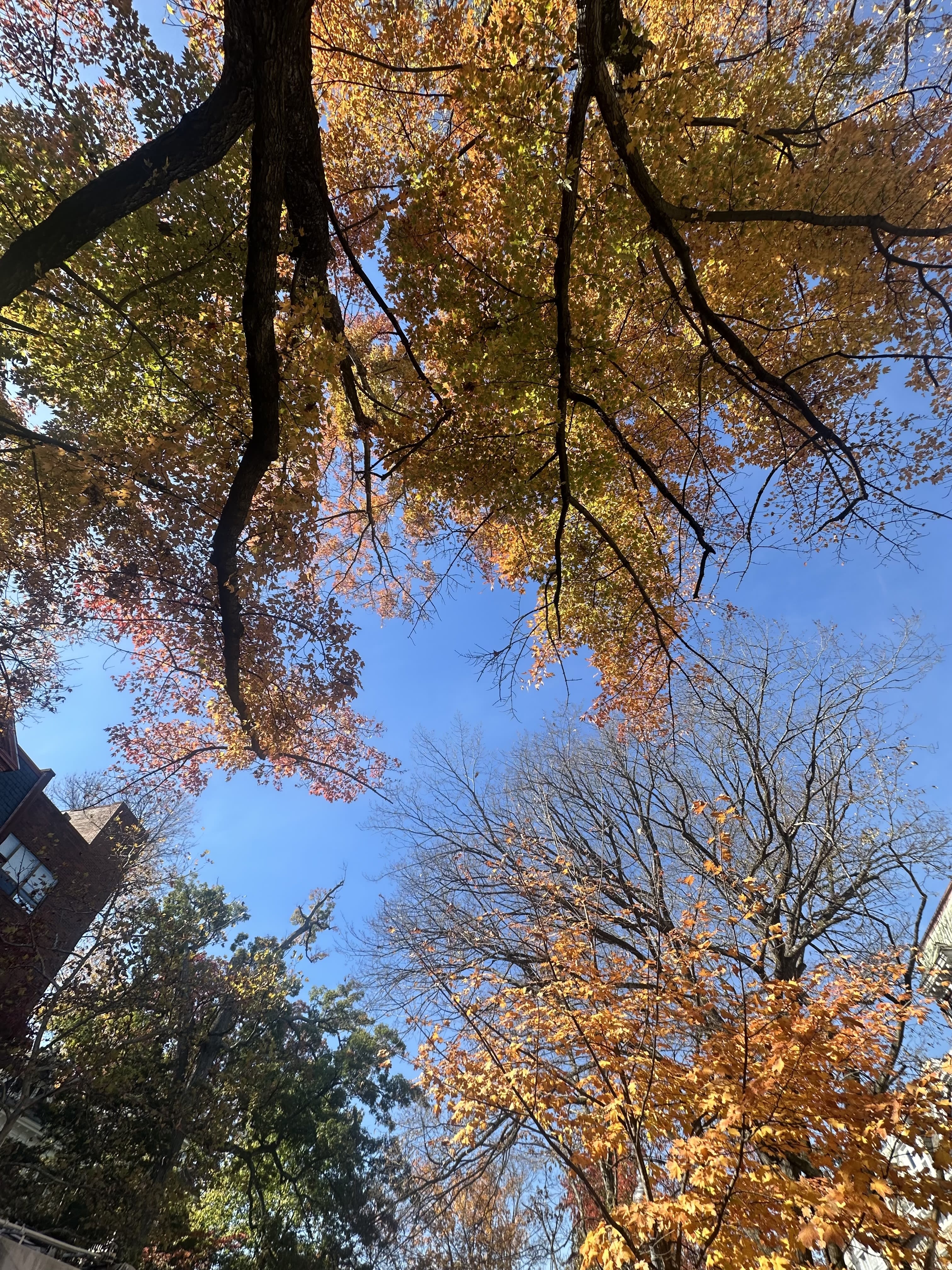
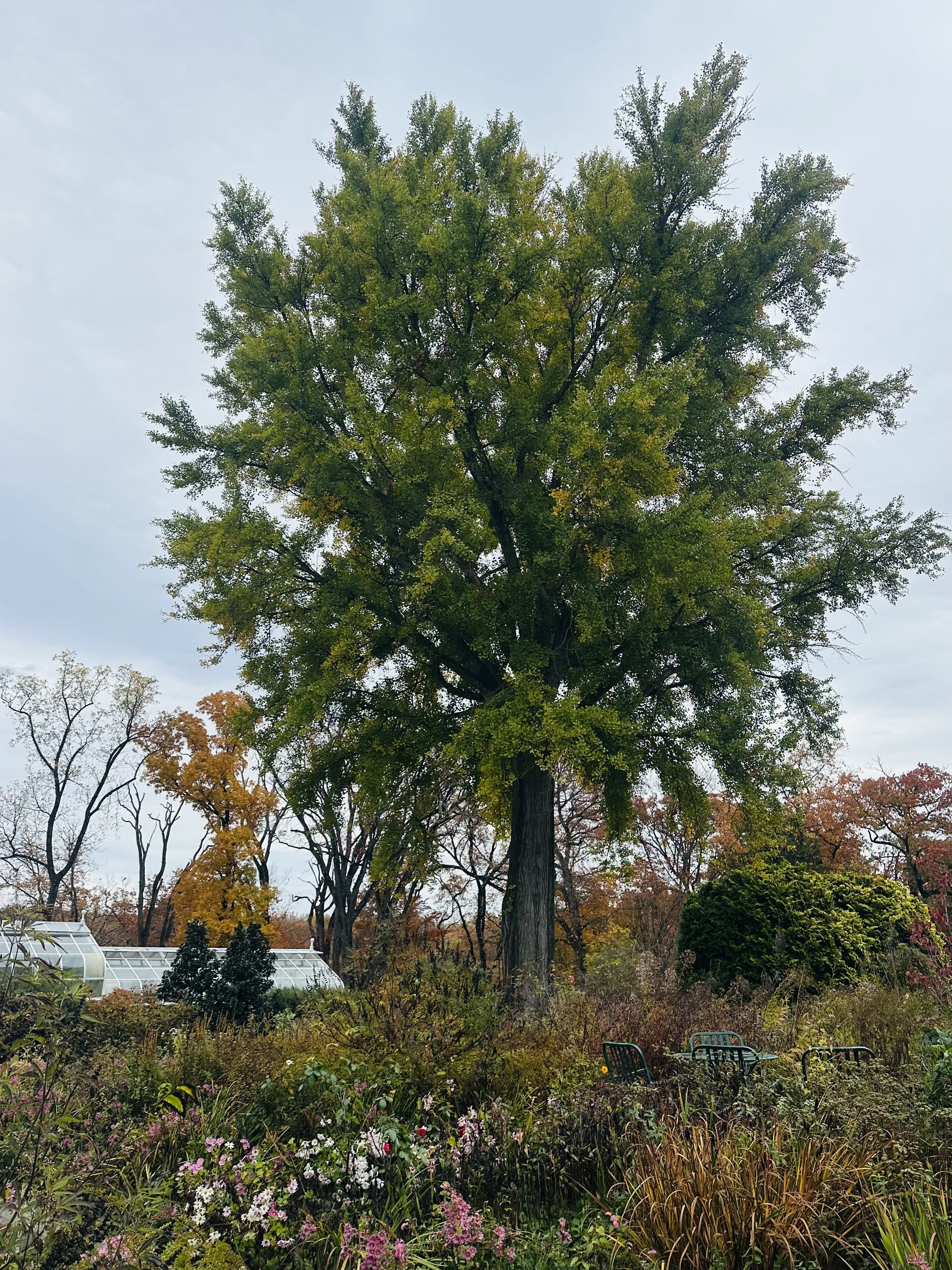
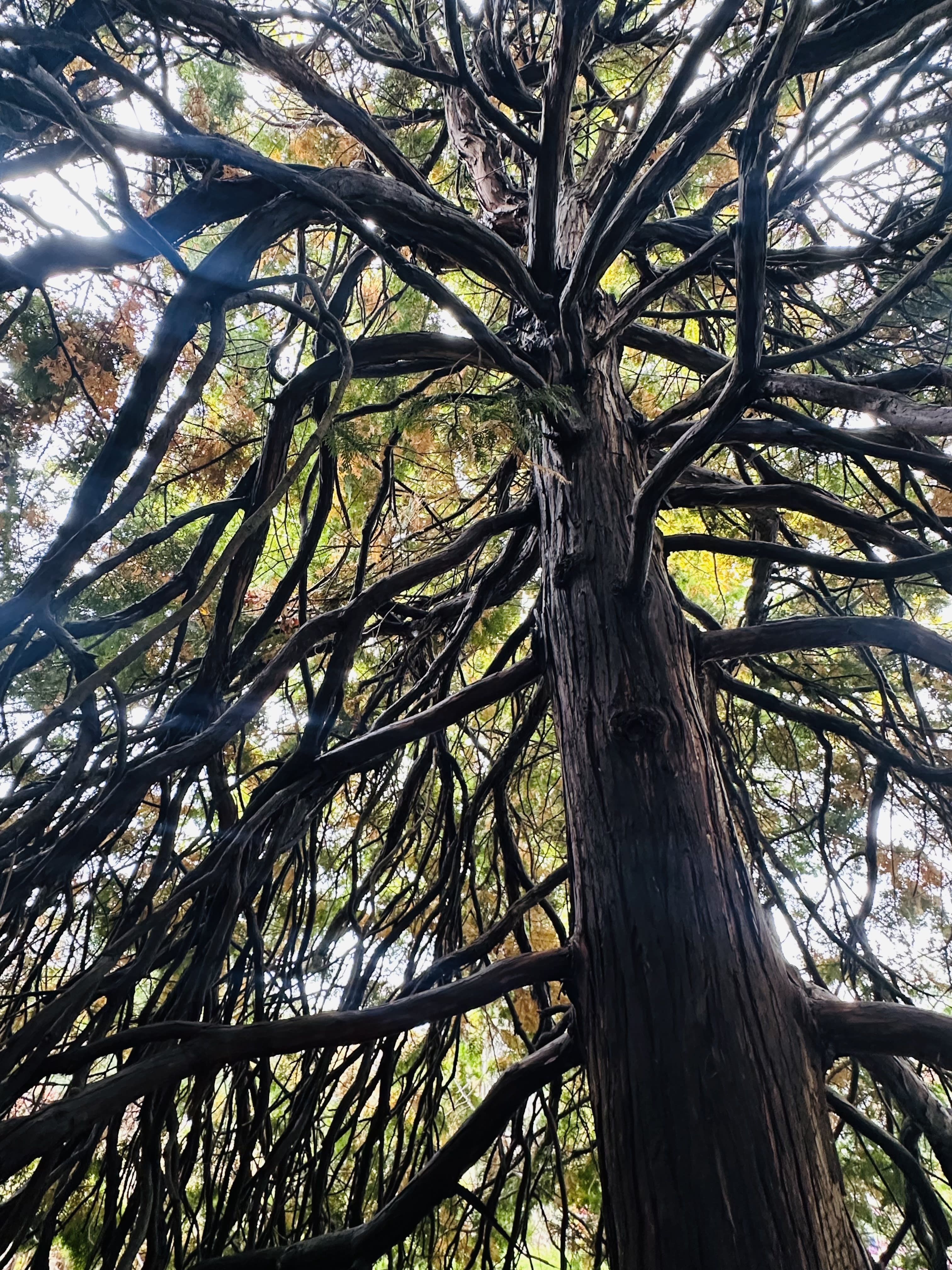
What makes fall foliage beautiful? What do I do with all this beauty?
I’ve been amusing myself with these kinds of freshman year philosophy questions while walking through my local woods these past, perfect weeks in the mid-atlantic, crayola blue sky, low 70s, confetti starbursts unfurling above. I make myself a road hazard with my gawking, wanting to drink in the fleeting glory, stunned by its perfection exactly now, but also, with the subtle differences, yesterday, again tomorrow, each stage of the ombre transition from green to gone.
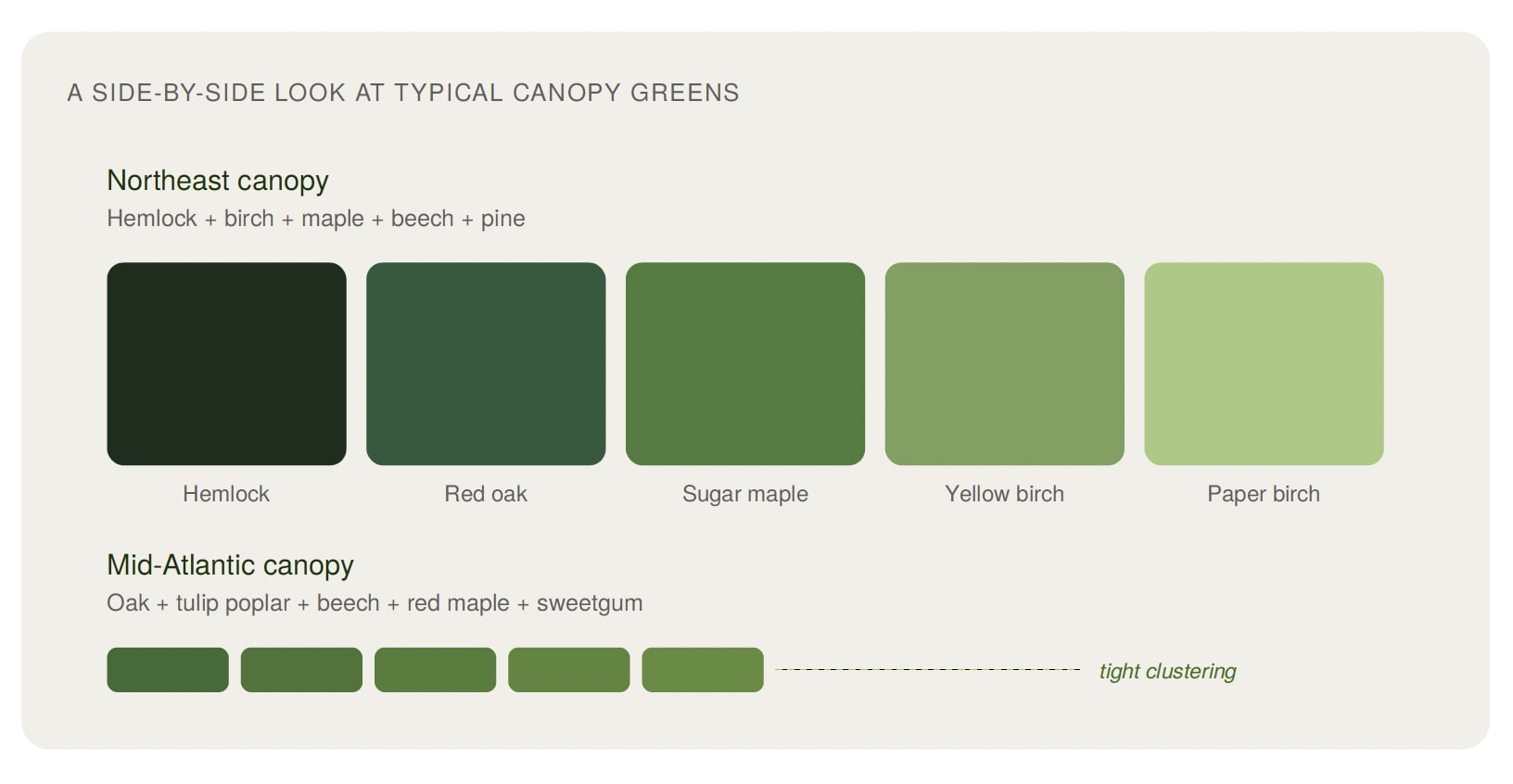
When my husband and I, west-coasters, first moved here from NY where we met, we were immediacy struck by the monotony of the mid-atlantic summer tree-scapes, the not-affectionately named wall of green. Turns out, we weren’t imagining this. The summer greens of our local trees all land in a similar place in the color spectrum:
In contrast to, well, the contrast of the forests of the NE or NW, we found it bland, unappealing. But come fall, the trees break away from the monotonous mean into a wide spectrum of color. (In scientific terms, “Every healthy broadleaf species converges to the same chlorophyll-dominated curve, and stays there until autumn breakdown reveals the carotenoids and anthocyanins underneath.”)
A leaf can be lovely, but the show-stopping beauty isn’t the result of any single leaf, or even any single tree, in it’s one way of showcasing this transition. It’s their divergence, their harmony, their response to the light, some holding fast, some changing, some drifting down, some forming soft carpet. The forest glows because the millions of leaves, of many kinds, all play their small part.
Yesterday, when I normally write my newsletter, I instead joined a small group guided forest bathing walk, a novel experience for me. It originates, our guide Ana explained, as a public health antidote to the deleterious impacts of overwork culture first proposed in the 1980s in Japan. “I’ll start with the bad news,” she quipped at the outset; “we’re not getting naked.”
In fact, save a ritual of pouring some apple cider out for Mother Earth and closing a bowl bell, the experience barely gave hippie. (It would have fit right in with the contemplative retreat experiences I’ve enjoyed and offered, but you may well categorize that as “hippie,” so maybe not a useful benchmark.)
Ana, our guide, extolled the many measurable health benefits of time in the woods: Reducing anxiety and depression. Decreasing cortisol levels and blood pressure. Increasing immune function. The woods make me happy, sure, but cure-all, really? I am as a rule skeptical of wonder drugs. I fact-checked. She was right. (See, e.g.: https://pmc.ncbi.nlm.nih.gov/articles/PMC2793341/ )
Apparently, in the woods we inhale in tree chemicals called phytoncides. Maybe you knew this? I did not. But, I learned, phytoncides are antimicrobial volatile organic compounds from trees. So the deep breaths we’re told to take are not merely enabling a psychological/psycho-somatic effect, but actually ingesting tree drugs. What happens next in the body is a process involving many intriguing technical terms (e.g., “human natural killer activity”) I will not attempt to synthesize, but simply note that said scientific paper concludes, in language I can understand, being midst the trees is good medicine.
(So, not weighing in on the beauty per se; maybe ugly trees give off just as many phytoncides. But who wants to bathe in an ugly forest? Personally, I feel I would be much healthier among beautiful trees. I have an idea for the next phase in the research … )
There are many ways to bathe a forest, but at heart it seems to essentially mean: be in nature, pay attention.
Do you notice what happens to you when you do?
Whether or not my immune system has improved, here’s what I’ve noticed these past few weeks of drinking in beauty: it brings me to life.
On my walk, a lone red maple flashes bright against a golden backdrop of trees across the road. Wham, a rush of unforced joy knocks me awake. Forest bathing, Ana invites us to stand with backs to a fountain, cup hands to ears; I’m suddenly so happy I nearly cry. Nothing in the wide world, or even my own meager life, has changed. Circumstances remain constant, but the well-being line shifts perceptibly up and to the right, bolstered with every daily walk, every gaze from my window upon this display.
You’d think a magic drug like this would be bottled and sold, prescription only, stored in a locked glass case. (Maybe someone is doing this as we speak with the phytoncides.) But there’s nothing I can do with all this stunning beauty. I can’t bottle it, buy or sell, possess it. In our modern economy, you could say it largely lacks utility (tourism dollars & maybe-health benefits notwithstanding) and thus remains unaccounted for. Yet it is unquestionably good.
There is something sacred about beauty we do not own, whether it be the neighbors’ towering tree raining its golden leaves on all passersby, the wide sunset over a horizon visible across the city, another human’s face, a melody, good writing. We can treasure this beauty without possession. In a world of easily acquirable, soon disposable stuff, promising every problem solved with few clicks and a credit card, perhaps doing so is both a spiritual discipline, retraining us toward what brings life, and an act of love, restraining ourselves from the need for more that so often comes at others’ expense.
And perhaps the failure of our economic charts to account for that vitality says less about the uselessness of beauty and more about the inadequacy of our measurements?
My monthly spiritual direction appointment, where I receive, rather than offer, is typically me alone in a room, tethered to my director via Zoom and God via an attention I picture as downward, deeply internal. But last week, in the face of this temporary beauty we experimented: instead of hunkering inward, we went outside, took a walk, connected by phones.
I immediately wondered if we’d made a mistake. I couldn’t listen to what God might be saying in the quiet of my soul, couldn’t carry a conversation—the gorgeous light-rimmed leaves were too distracting a visual feast. I was, in the presence of this beauty, too besotted, joy-struck, to focus on myself. It lifted my eyes to something beyond.
And maybe that’s exactly the point. There is a time to go inward, but self-reflection works best as a stage on the road up and out. Perhaps in addition to silence drawing us down, we need practices that elevate our gaze, take us out of ourselves in all our smallness. Beauty does this.
Maybe beauty is more useful than we realize.
As beauty draws us out of ourselves, it has a side-effect of drawing us toward others. When we lift our gaze it’s not only the trees that we can see, but our fellow humans. Beauty un-possessed, freely available to our neighbors, offers a point of connection (though to be fair, I’ve learned first-hand bad weather—a sudden storm, suffocating humidity, can do this too!). But the connective tissue formed by sharing beauty elevates and unites with an X factor I can best describe with a visual, the distance between two points at the base of a triangle shrinking as they move toward the tip.
I experienced this in the forest bathing. Two hours absorbing the beauty of the woods together draped our group of mostly-strangers in a soft camaraderie, like we were for each other, without knowing the details of each others’ stories, whether we agreed about important things. It would make an excellent precursor to a divide-crossing dialogue.
Felt a hint of it earlier in the week walking home after dropping kids off at a camp on election day. A man I don’t know walks his dog slowly in the same direction. I pass him, offer a simple hi.
He takes my bid, raises: hi, how are you?
Fine, I reply the customary response, but follow through, how about you?
I’m good, he says, pauses, as if to consider whether to go further. Beautiful day. Those two words could be a rote recitation, like my fine, or an invitation. It is a beautiful day.
Beautiful day for an election, I add, gesturing to the signs wedged into the tree beds along the school.
Whatever that means for us in DC. We laugh. We don’t know each other but basking together in this same fine day, we speak as neighbors. We chat until we reach the end of the block and part ways. It’s not like he’s my new best friend, but a meaningful interaction as humans over staring down at screens matters, one more solid knit in a social fabric.
It was the addition of those simple words that did it—beautiful day—and of course, the beauty they pointed toward.
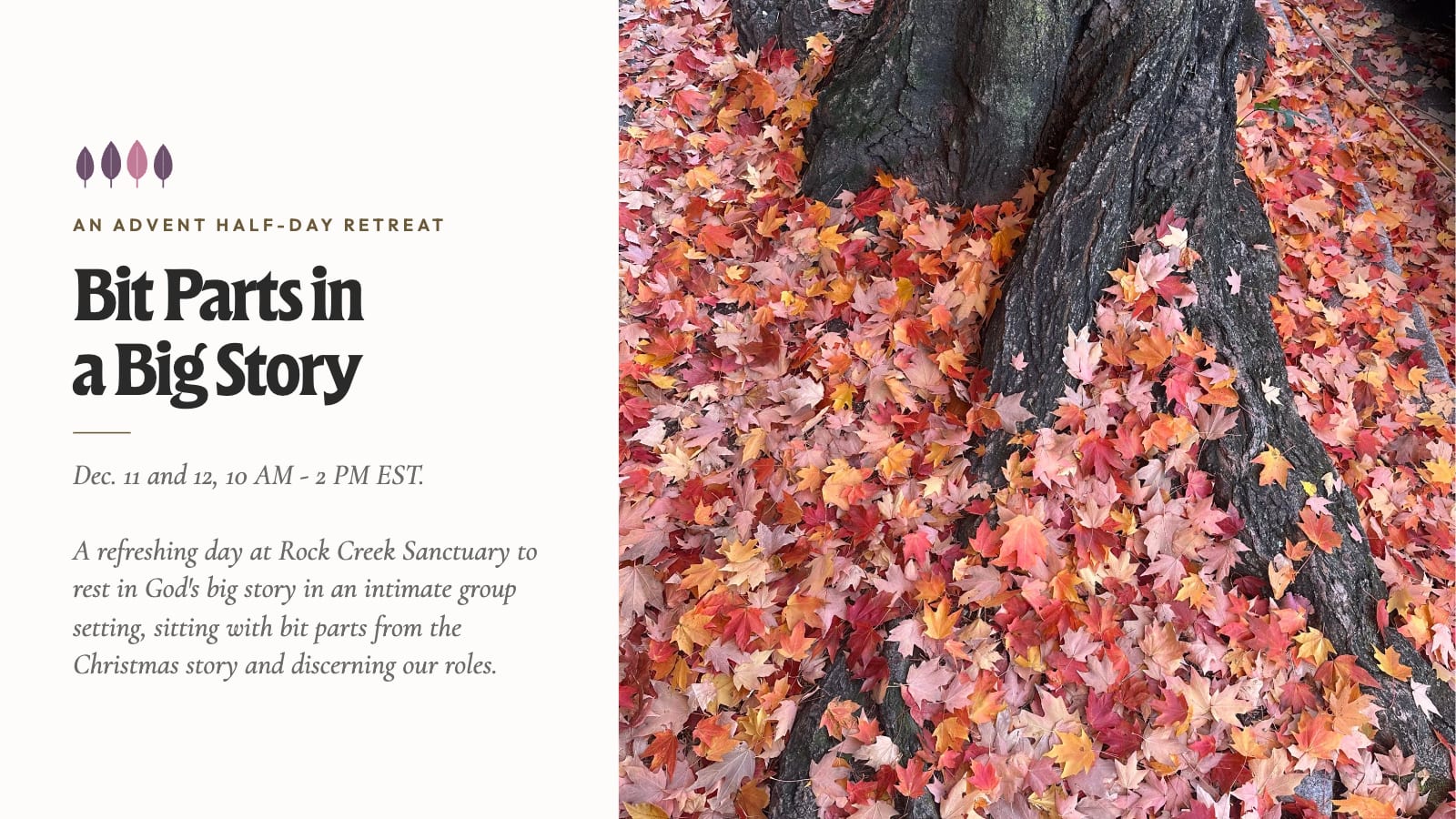
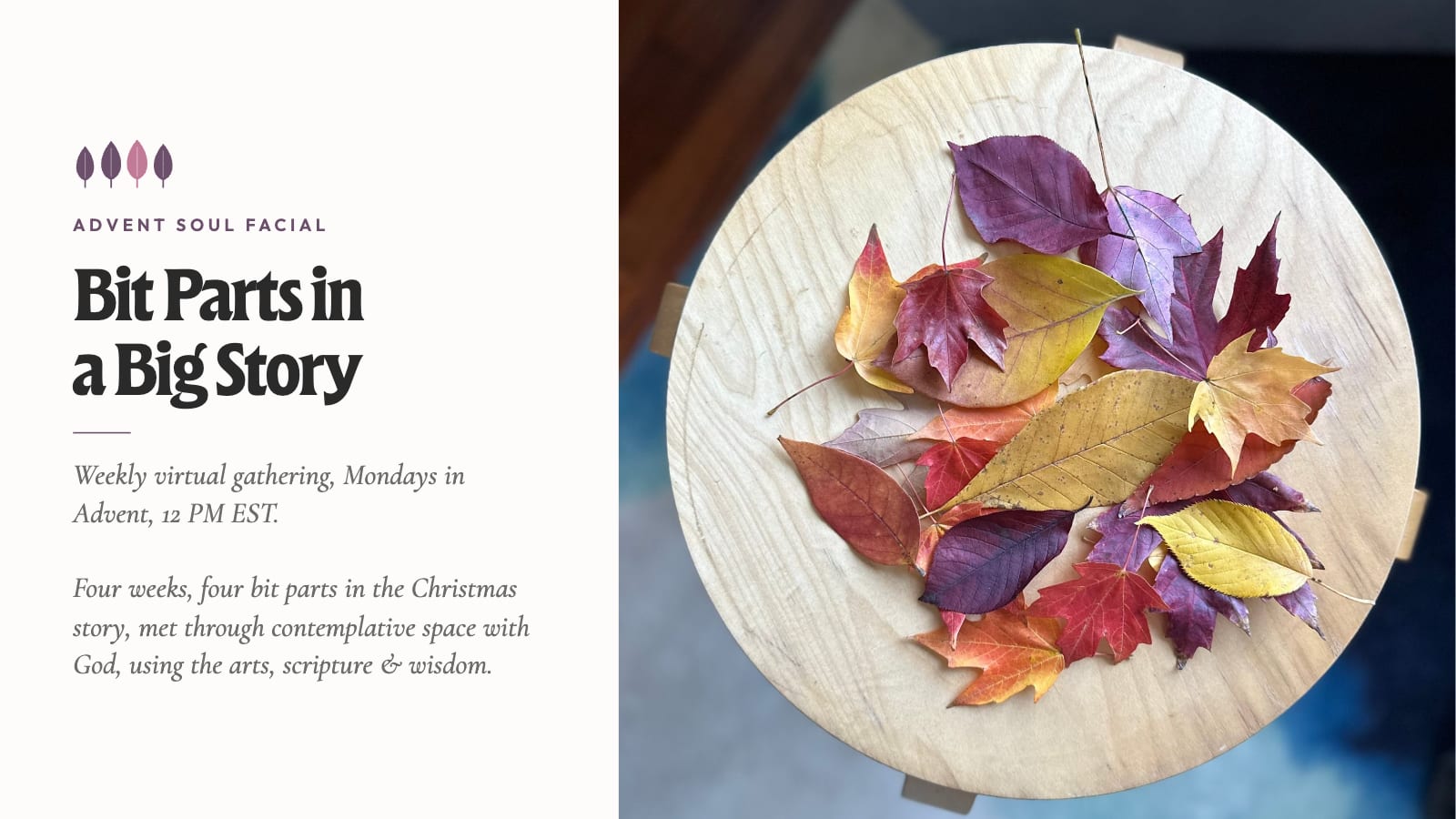
This is a long way of inviting you to Advent practices aimed at helping behold what is beautiful and rest in our role in a bigger story (like leaves do!). Registration is open for virtual and in person Advent retreats. An Advent calender coming soon. Everything is by donation / free.