Native Perennials
February 25, 2026
Volunteering with the local elementary school, a fellow mom recounts her history in our neighborhood. “We just closed on a house in the neighborhood, and this is our first year at the school. But I’ve been living here since my 20s,” she confides, “I used to walk around here with my boyfriend at the time, looking at all the parents with strollers and dogs, thinking how that was everything I wanted, the house, the kids, the dog…”
“Look at you now! You’re living the life you used to want!”
“It’s true,” she acknowledges, a tinge of wistfulness. What wild celebratory gratitude we might feel at such a privilege. But do we? We get what we want only to find our eyes drifting toward a distant goalpoast. The mom pushing the stroller gazes longingly at the person in her 20s, dashing off to meet friends for brunch, free to leave the house without wet wipes. It’s just so easy to resist your own season and long for another. Speaking for a friend.
My mom answered my call from her front patio, in the middle of planting bright pansies into elegant large pots, joining the flower parade that festoons the wide brick space outside her house most of the year. When the heat of July knocks out the pansies, she’ll have pots of basil the size of small cars basking in that sun, forests of tomato plants, buckets of fresh roses clipped daily. It’s like an ad for a garden catalog, lush at every level, all the way up to the graceful limbs of trees she planted when I was a child.
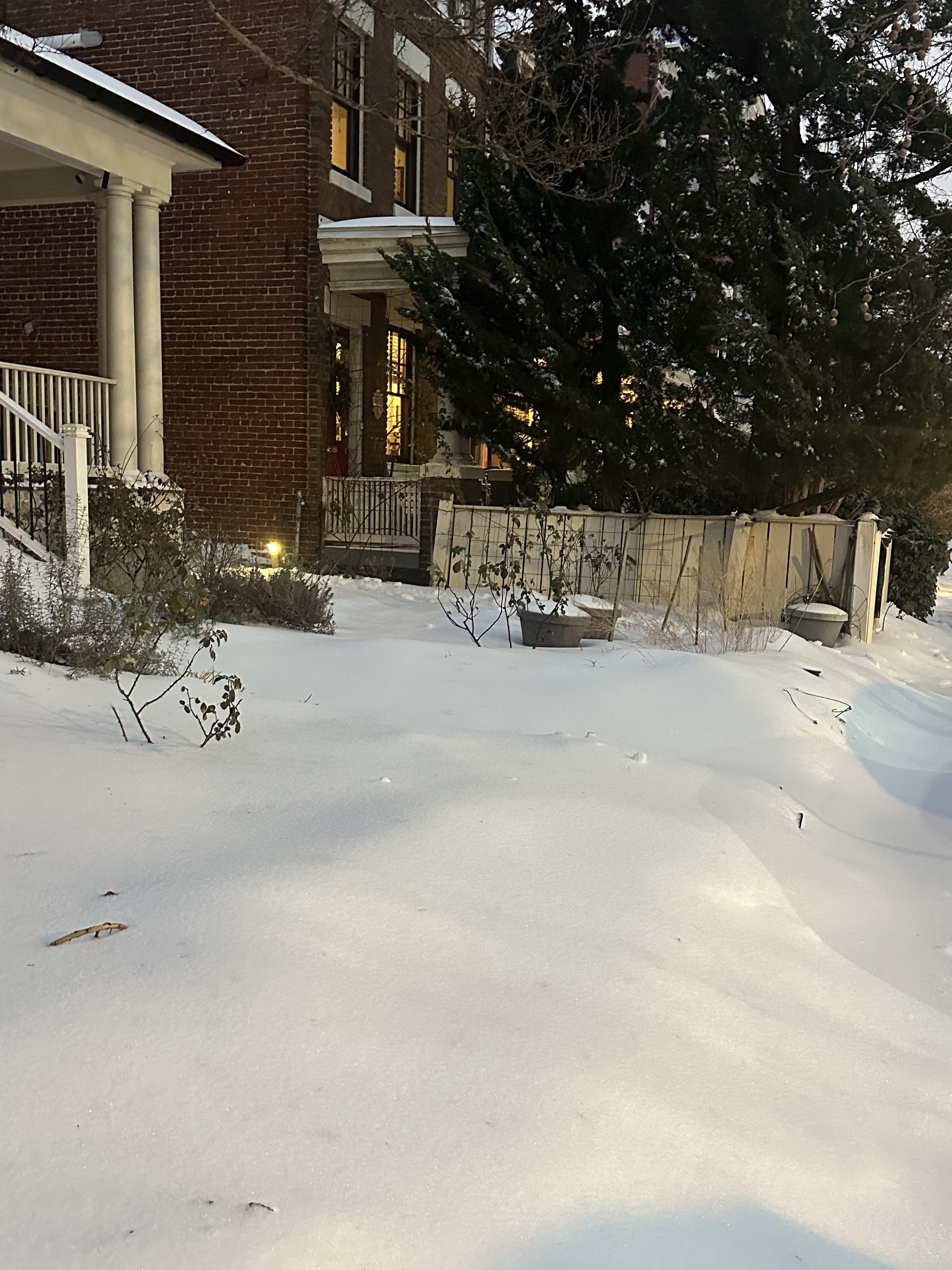
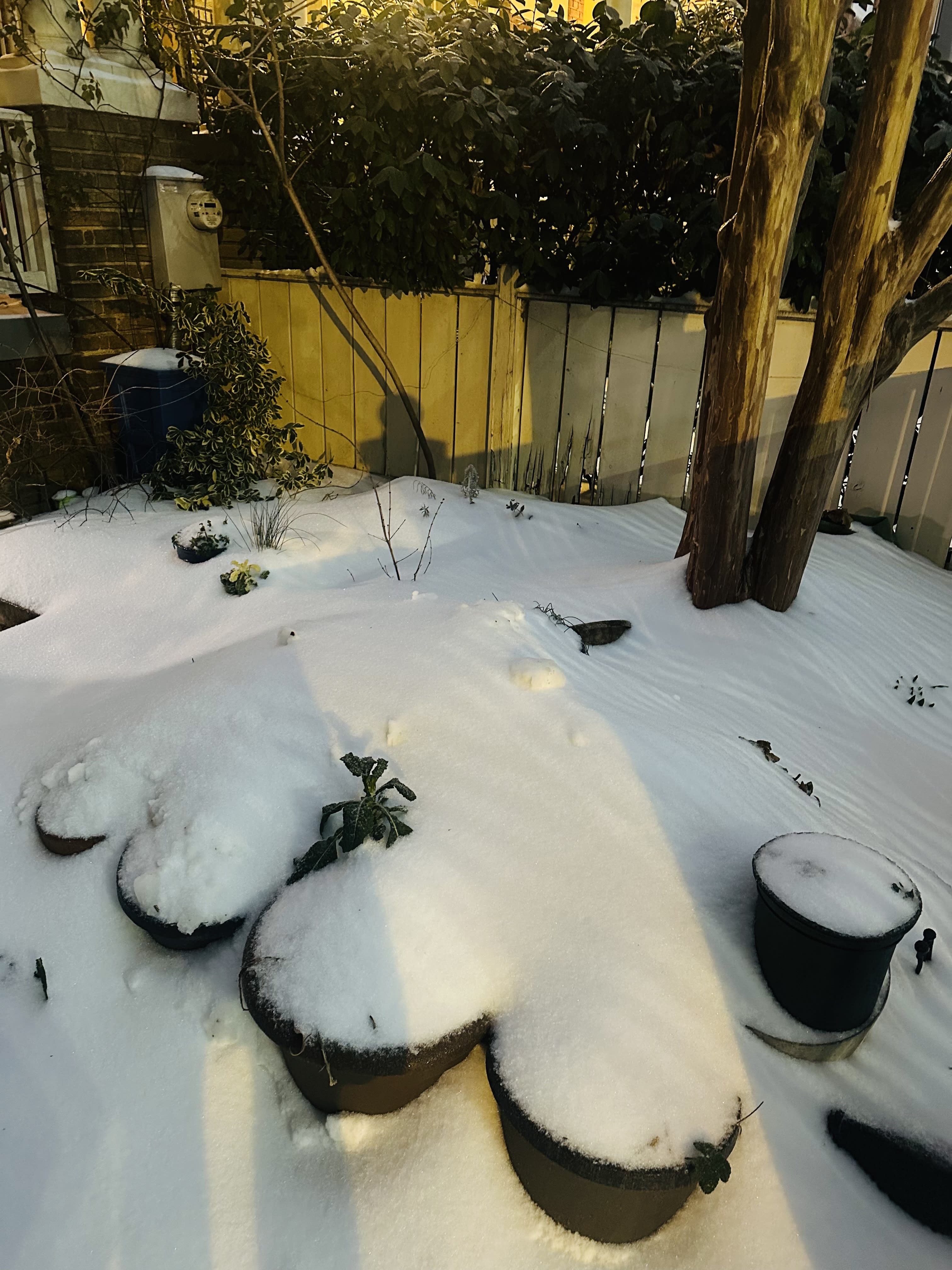
Meanwhile, a couple inches of wet snow is accumulating outside my home, burying the cluster of plastic pots in my meager yard. “This is normally when I would prune my roses,” I sigh, recalling the advice my mother-in-law gave me years ago: prune on Valentine’s Day. Simple. But not with our yard covered in “snow-crete” for weeks.
“Oh, I finished those last week,” my mother responds.
I’ll be digging myself out of fresh snow while she’s admiring sparkles of yellow and blue from her living room, anticipating weekend pruning when things melt while her roses are already sending out tentative shoots new growth prompted by pruning.
How easy to compare someone else’s surface—the cute kid in the stroller, the laughing woman at brunch—with our own feral depths, doomscrolling our way through life.
But if we’re really going to compare, let’s look at the full picture:
- Mom’s temperate winter is nearly done and I’m under a blizzard watch.
- She’s retired; I’m in the height of active work life.
- Her kids are grown, mine are needy little
monsterstreasures. - She’s been gardening for decades, I’m a few years in.
- She grows under sun-drenched open skies, in fertile volcanic soil.
- I grow in a shaded urban plot of clay soil shot through with rocks and rubble.
We are, in short, in wildly different seasons. Vastly different terrain. I should not expect to garden as she does, not here, not now.
I can bunch myself up with envy, breed frustration as I push against my reality—or I can acknowledge the season and space I am in, seek to grow what my reality can support. Which approach, do you think, would bring me more joy?
I’m at the beginning of my second year of exploring vocational calling outside the safe confines of a job, no boss to define the vision I should pursue, no performance review to ignite the warm fuzzies of achievement. Those little handholds of sufficiency a job affords as one climbs, the next promotion, the next quarter’s results, the next bonus—may be false, but they’re visible, and so cunningly appealing to signal you’re doing it right. In their absence, you can feel left to navigate blind.
Into the void creeps the familiar voice of should, masquerading as a tidy solution to the fear of uncertainty, but rapidly developing an insatiable appetite for unreasonable expectations. You should get something done. You should have it figured out. You should have a clear roadmap to a spectacular destination. You should focus more on [whatever part of life you’re not focusing on as much, because the last should pointed you elsewhere]. And you really should have put on some lipstick before you made that video.
One year in, you should have the beautiful, well-established (metaphorical) garden of your mother.
What pulls us out of should anxiety and back to the joy of “I’m living the life I used to want”?
Remembering the season we’re in. Asking what it makes possible. Seeking to celebrate and collaborate with it, not fight it.
Right now I’m doing this in my (metaphorical) garden by seeking to plant (metaphorical) native perennials, plants matched to local conditions, evolved to thrive where they are.
I want my work to create a haven of rest, restoration, delight, like a little cottage surrounded by the kind of lush garden my mother tends.
But as any good gardener knows, you don’t anchor a garden with charming little pansies, not even a stunner of a lily. Turning a bare plot into a haven begins not with sweet dots of color, but steady, unremarkable shrubs. Saplings. Seedlings. Tiny versions of prosaic plants that will grow to take up space, like the baby trees my mom planted in my youth, returning each year without much prodding, creating the feeling of being held in a safe wall of green. A pansy is charming in a pot next to the Adirondack chair set beneath towering branches, with a backdrop of a garden bed stuffed with native perennials.
Go to any garden center and look at the native perennials, if you can tear yourself away from the shinier plants. They probably won’t send your heart pounding with excitement; who gushes about eastern columbine or swamp milkweed? Especially in the first few years, as they expend most of their energy below ground, expanding the root system.
But they keep returning, expanding, filling more of the garden while requiring less from the gardener. Once established, they generally don’t need food or protection. They cooperate with you in creating a prime backdrop for the short-lived, showier stuff. They tend to attract the right bugs and repel the wrong ones. They may offer resting place or food, or with their expansive root systems, improve soil health, promoting a healthy ecosystem that benefits all residents of the garden. When is the right time to fill your garden with a slew of native perennials? Three years ago.
Native perennials also take work, especially at the beginning. Large holes for the roots to fill in. Consistent watering while they’re vulnerable. Perhaps the hardest thing: resisting the urge to crowd the space with more, better. Giving them room to breathe, small and unimpressive as they are.
Patient tending to small things that will grow and endure is the precursor to all those benefits.
And for the gardener—or human—with finite resources, this patient tending might mean at least temporarily dying to the urge to fill a box with a hundred dazzling little plants that would look so pretty in your stark plots, tolerating the discomfort at the rather plain appearance while trusting in what’s growing underneath.
Shall we move out of the metaphor?
Put it this way: ever had a conversation like this?
How are you / great, busy. / Yeah, same. / Yeah, it sometimes feels like too much. / Yeah, I need to cut back. / Yeah. / Yeah.
I’ve had it dozens of times. I, the hard-working souls with whom I converse—at church, on client calls, in the school pick up line—we long to carve space for more than output, to get enough sleep, to be present to people. That means making hard choices about what we say yes to. There are simply too many magnificent things to fill a day with.
I can’t tell you what to choose. I don’t know what season you’re in. My mom chose pansies and pruning the roses, what her garden needed this February. I choose to mostly ignore mine while it’s buried under snow to hold a crying kid on my lap or type this blog post.
In the building season of something new, as I am in, the right choices are probably ahem, native perennials … .
OK Jeannie Rose but really want do you mean by that??!!
I should have it figured out—er, scratch that. I’m exploring what that means. It’s OK that I don’t fully know. But I know the vibe: less visible productivity in things I long to eventually create more of. Less frequent finished writing, perhaps. Fewer gatherings. Spending time on building the foundation, like drafting the book proposal, making this website. Developing a brand kit? Hashing out core offerings? Learning how to make reels—even if I forget the lipstick.
None of this is all that visible or sparkly, but all of it contributes to the haven I long to grow in time. So I’m seeking to give myself to this work in this season of the garden, tending what is, resisting the urge to compare.
Whatever season you are, I hope you can find ways to do the same. Even if seasons where you’re not living the life you used to want, I hope we can celebrate the privilege of living the life we have.